Category Archives: Photos

From Bukovina via Mechelen/Belgium to Auschwitz • 1942-1944

As a result of the meticulous and thorough research of the Kazerne Dossin Memorial, Museum and Documentation Centre on Holocaust and Human Rights, Mecheln-Auschwitz 1942-1944 is a trilingual series (Dutch, French and English) of four books dealing with the persecution and deportation of Jews and gypsies from the SS-Sammellager in the Dossin Barracks in Mechelen to Auschwitz. Only a few miles away fom the SS Camp Fort Breendonk, the Dossin Barracks were used from 1942 until 1944 as a transit camp for Jews and gypsies from Belgium and the North of France, assembled here to set out on their journey of no return to Auschwitz. The first part of the series presents the reader with a historical overview of the racist and anti-Semitic persecutions in Belgium and the North of France. It focuses on the complex and poignant story of the action, reaction and interaction between occupier, occupied and persecuted, confronted with the final solution. It also relates the history of each individual transport.


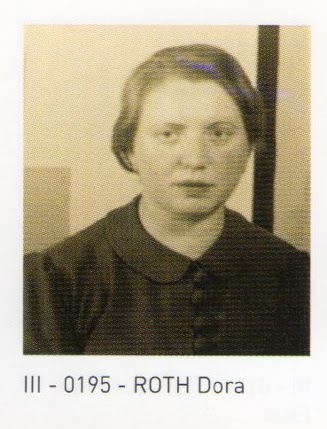
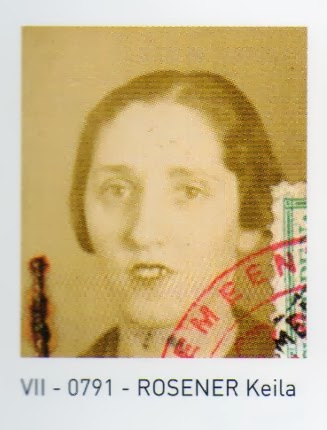
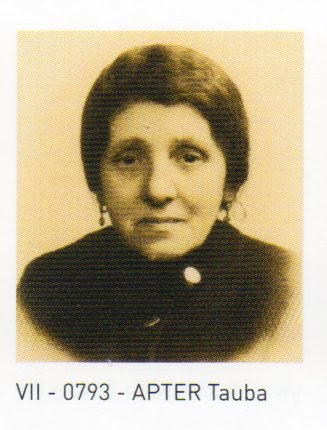
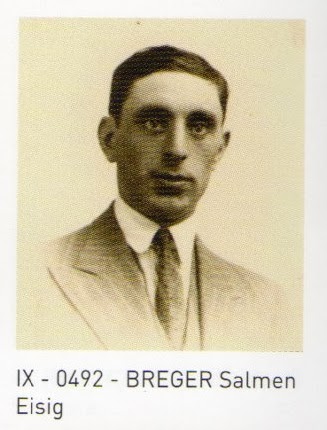
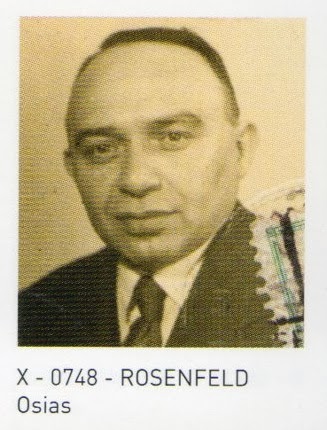
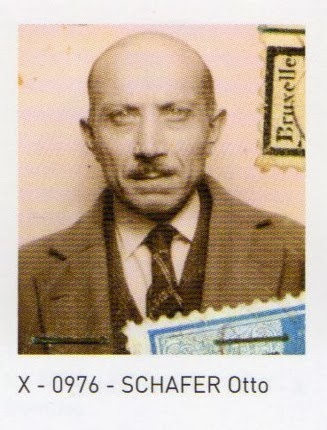
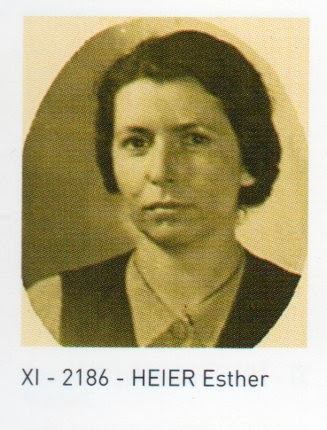
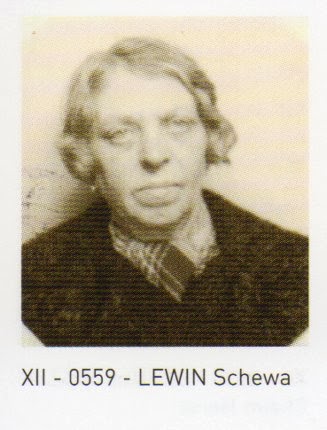
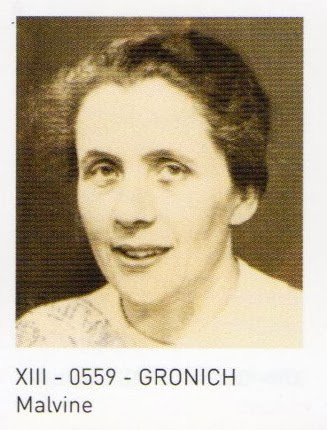
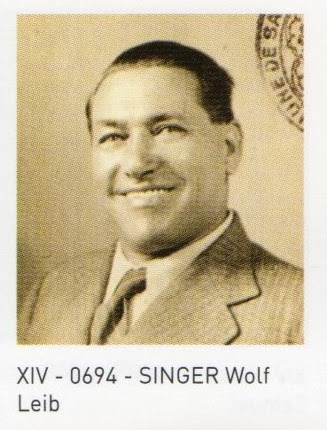
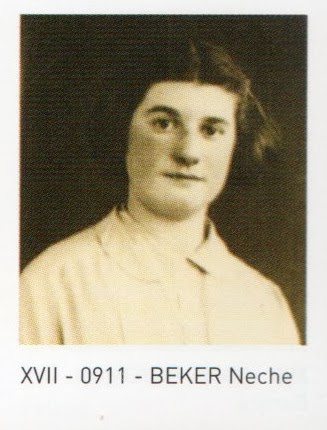
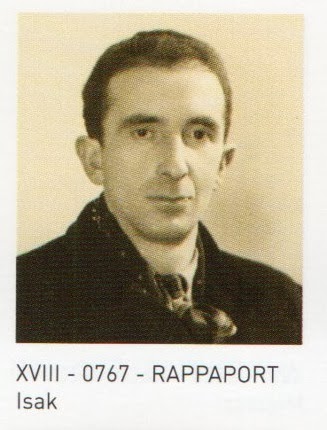
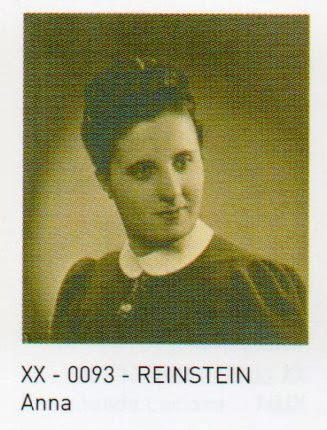
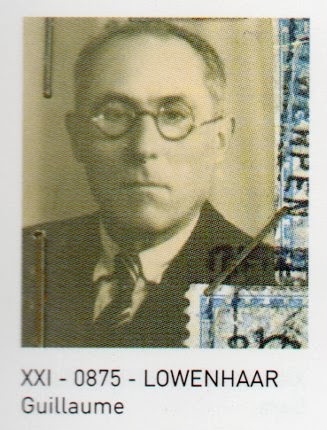
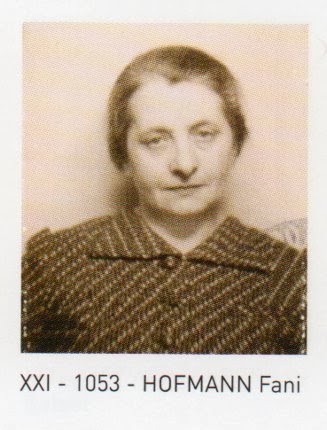
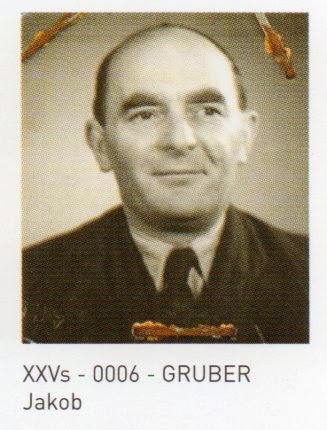
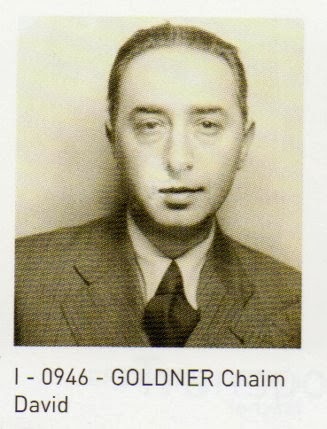
Parts two and three show us the portraits of 18,522 out of 25,259 deportees, wagon by wagon and transport by transport. These pictures literally give the genocide a face. Among these portraits we succeeded to identify 97 out of 104 deportees, who had their roots in Bukovina. Leon Messing, born on 12 June 1927 in Czernowitz, was 15 years old and the youngest deportee from Bukovina on the date of departure of Transport 10 on 15 December 1942. The oldest deportee from Bukovina was Abraham Moses Reder, born on 17 August 1866 in Czernowitz, i. e. he was 76 years old on the date of deportation on Transport 11 of 26 September 1942. Just like my uncle Maximilian Hauster, born on 26 November 1909 in Czernowitz, deported with Transport 19 of 14 January 1943, neither would return in 1945.

Part four contains the revised and corrected alphabetical list of names of the victims, together with biographical information about their personal fate. We have excerpted from this database those 104 deportees, who originated from Bukovina and compiled a listing in alphabetical order, which is available for download as PDF file by clicking just here or on the picture below.
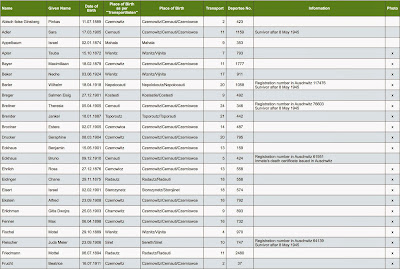
http://hauster.de/data/Mecheln.pdf

Only two women and two men out of 104 deportees survived after 8 May 1945: Sara Adler and Theresia Breitner from Czernowitz, Wilhelm Berler from Nepolokoutz and Juda Meier Fleischer from Siret. 96,2% of the people originated from Bukovina deported on these in total 28 Transports were wiped out.

The documentary Transport XX to Auschwitz by Karen Lynne, Richard Bloom and Michel van der Burg is illustrating the inhuman and unimaginable suffering of the Jews and gypsies from Belgium during the Holocaust.

Vienna Jewish Cemetery

From Simon Kreindler:

I really enjoyed reading Christian’s blog re Vienna and wanted to post the attached photos I took when I visited the cemetery a couple of years ago but there was no way to do it. If you think it is relevant, could you please do so.
Best regards,
Simon
Cemetery1
Cemetery2


[This post refers to Christian’s blog post which starts: Subject: [Cz-L] A Gate between the Worlds – From: Christian Herrmann <cyberorange@gmx.de> – Date: Tue, 22 Oct 2013 23:01:21 +0200 – X-Message-Number: 5

Dear all,
A business trip a few days ago has given me the opportunity to experience a little bit of Jewish Vienna â•„ with very limited time and very superficial, but after all more than nothing. Vienna was not only the gateway from Central Europe to the eastern provinces of the Habsburg Empire, it was also the gateway to the West for many Jewish immigrants in search of a better future. A travel report. –Ed]

Link: http://czernowitz.ehpes.com/czernowitz12/testfile2013-3/0388.html

Views on Czernowitz – Views from Chernivtsi

194045_original

Marion Tauschwitz: “…following traces of Selma’s life I try to breathe as much Czernowitz atmosphere as possible. So yesterday I went to an interesting exhibition: Ansichten of Czernowitz. Young people have started to discover Czernowitz and to claim the town as their heritage: ancient views caught by young people who discover Czernowitz’ history and start being proud of what has been created in Czernowitz. The project started in spring and summer 2013 initiated by “Zentrum Gedankendach” by Oxana Matijchuk, the forum of architectures of Lübeck and the Oead Cooperation Centre of Lemberg. A Jury chose the 16 best motives and they were printed as postcards. The idea is to send the postcards to people all over the world and so transport the spirit of Czernowitz into the world. “Zentrum Gedankendach” and a local journalist documentated the opening exhibition and took interviews and they want to try to offer the film to a German TV station . They asked what I thought about the project – I told them that I am fascinated by the idea and that I think it is time for young people to start to cope with the history of their town. To discover the wealth of the culture that was created by Czernowitzers – especially by the Jewish population. to follow the tragic traces,too. These traces can be found all over the town. Each stones has its story, each “Kanaldeckel” can tell about history. Today I went along former Bischof Hackmen Gasse and discovered “Kanaldeckel” – from Vienna, Rumanian and Sowjet times – lined up in one row. Lined up history….”

196528_original

Source: http://gr-czernowitz.livejournal.com/3448022.html