
Courtesy of Edward Turkiewitsch

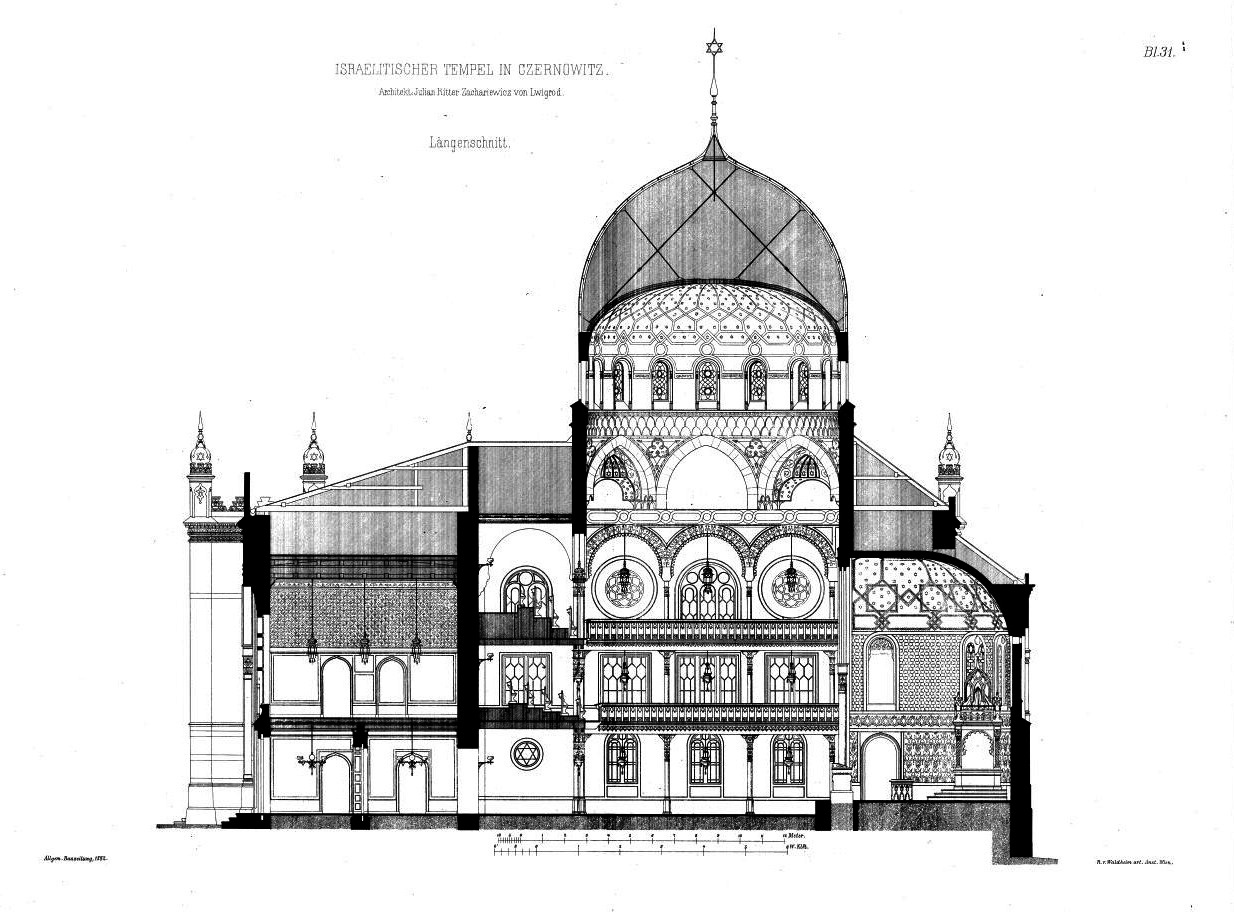


Download: Architectural Specifications as per Allgemeine Bauzeitung Vienna, 1882
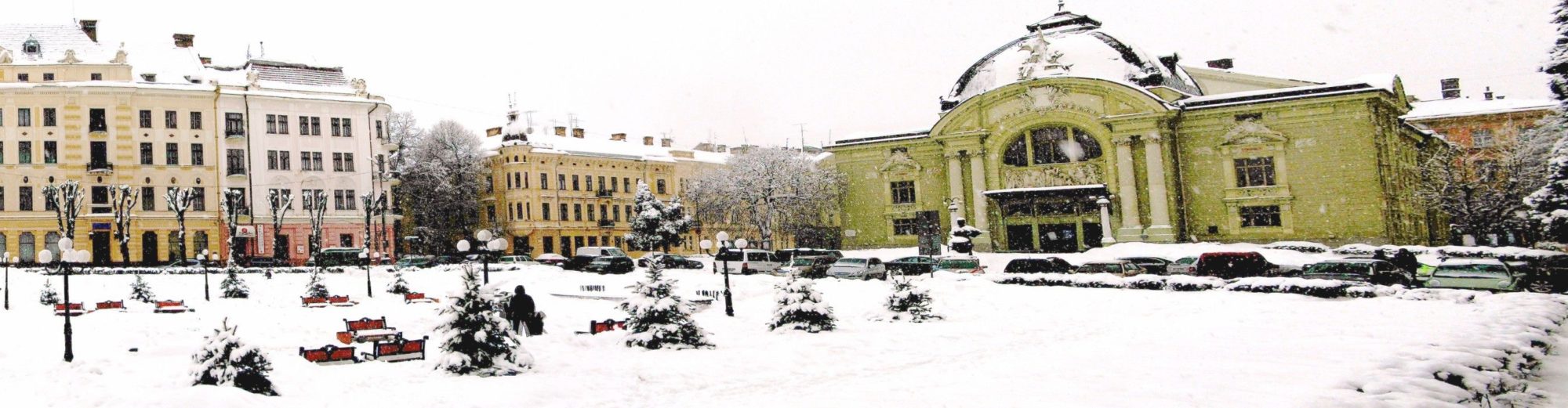
Download: Architectural Specifications as per Allgemeine Bauzeitung Vienna, 1882


In January 2011 I stated as follows: “Josef Focsaneanu, a very well known pharmacist in Sadagora, deceased on 13.01.1933 at the age of 72 years. We learn, that – among many personalities from Czernowitz and Sadagora – Josef’s three sons, Dr. Lazar Focsaneanu, Saki and Fritz Focsaneanu attended the mourning ceremony. We come across Saki’s name again in Hugo Gold’s “Geschichte der Juden in der Bukowina”:
“The summer of 1940 brought a great surprise with the marching in of the Soviet Russians, but also a great disappointment. The Sadagurans had hoped for deliverance from the Romanian Jew-hating regime, but the nationalization of the people’s possessions in the year 1940, from which the Jews were the most to suffer, was superseded in the spring of 1941 by the deportation of the so-called asocial elements, the so-called bourgeoisie, the small businessmen – there were no wholesalers any more – and the hard working trades people, who in their small businesses with a few workers and modern machines had achieved a modicum of success, and the Zionists. Many were jailed, like the pharmacist, Sacki Fokschaner, and the Jewish Gemeinde secretary, Josef Körner, who perished there. Many were deported to Siberia, such as Nathan Luttinger, Mosche Stupp, Hersch Roll, Mottl Katz, Jakob Rechter, Leon Brender, Leiser Metsch, Isak Beutel, and many others perished there with their families from hunger and cold.”
But who knows, perhaps there are still descendants of Josef Focsaneanu out there!?”
More than nine years later, in March 2020, Frank Fokschaneanu, Josef Focșăneanu’s great-grandson, contacted me by sharing details from his family history and the amazing family photo below. Frank’s grandfather Friedrich Fokschaneanu was the founder of the Goetheplatz-Apotheke in Munich. The family tradition persists!

NN, Josef Focșăneanu, Friedrich (Fritz) Focșăneanu, Sakhi Focșăneanu, Lazar Focșăneanu, NN
At the turn of the year 1932, Henry Ludwig Mond, 2nd Baron Melchett, pays a visit to Czernowitz, accompanied by his secretary, a son of the famous poet and Zionist politician Berthold Feiwel.


Henry Ludwig Mond, 2nd Baron Melchett, 10.05.1898 – 22.01.1949, was a British politician, industrialist and financier. Henry Mond was born in London, the only son of Alfred Moritz Mond, 1st Baron Melchett, and his wife Violet. He first visited Palestine in 1921 with Chaim Weizmann and subsequently became an enthusiastic Zionist, contributing money to the Jewish Colonization Corporation for Palestine and writing for Zionist publications. He became President of the British Zionist Foundation and made financial contributions to Zionist causes. He was the first President of the Technion in 1925. Melchett founded the town of Tel Mond, now in Israel.

Henry Mond With His Father and Two Sons

Statue of Lord Melchett in Tel Mond
He was educated at Winchester College. From 1915 he served in World War I with the South Wales Borderers but was wounded in 1916. He then joined some of his father’s businesses, becoming a director, and from 1940 to 1947 chairman, of Imperial Chemical Industries and he was also a director of the Mond Nickel Company and Barclays Bank. He served as Member of Parliament for the Isle of Ely 1923-24 as a Liberal. He then became a Conservative and was Member of Parliament for Liverpool East Toxteth from 1929 to 1931. On the death of his father in 1930 he succeeded to the barony becoming the 2nd Baron Melchett. He then set about restoring the family finances and moved his interests away from politics to economics.
Having been brought up in the Church of England, he reverted to his family’s Judaism in the 1930s and became a champion of Zionism, hoping that the Jews and Arabs could live harmoniously with each other. He advocated the evacuation of Jews from Germany to Palestine and supported the formation of an independent state of Palestine as part of the British Commonwealth. He was chairman of the British Agency for Palestine and took an interest in the Maccabean Jewish youth organisation. He married Amy Gwen Wilson, from South Africa, in 1920. She was described as: “a show stopping beauty and artist”.


They had a London home, Mulberry House in Smith Square, Westminster, which had a work of art by the era’s proment artist Charles Sargeant Jagger on display in their living room. This revealed a sensational secret that led to censure and outrage. They indulged in a ménage à trois with writer Gilbert Cannan, a friend of D H Lawrence. Paying homage to their sexual proclivities, they commissioned a 1.6m high relief from Jagger called “Scandal”. This showed a naked couple in an intimate embrace watched by society ladies in a state of outrage. The work was bought by the Victoria and Albert Museum for £106,000 where it is on display.

Mulberry House – Lord & Lady Melchett’s London Residence


They had had two sons and one daughter. The elder son, Derek, was killed in a flying accident while he was serving with the Royal Naval Volunteer Reserve in 1945. Mond bought and restored Colworth House on the edge of the Bedfordshire village of Sharnbrook and lived there for twelve years. During World War II he made the house available for the recuperation of American nurses and to house Jewish refugees.

Colworth House
He sold the house to Unilever in 1947 due to his wife’s conviction that moving to Florida would restore his health. He died at Miami Beach, Florida in 1949 and the title passed to his surviving son Julian.
Released by Edgar Hauster, based on Eric Turner’s article for the APOLLO MAGAZINE, dated 22.09.1009, published by The Esoteric Curiosa.


Links: Der Liebesexpreß/Eight Days of Happiness (1931) – Joseph Schmidt – Dina Gralla – Der Tag
In 1932 Simon Rosner built an Eiffel Tower out of plywood, which was then exhibited for a whole year in a Czernowitz downtown shop’s window. The picture from March 14th, 1932 is showing him and the Eiffel Tower. And here is the English version of the two paragrahs in Charles Rosner’s book about the period in the early thirties in Czernowitz, when his father, Simon Rosner, got closer to his mother, Rusia Wagner:“…From then on, Simon enters Rusia’s group of friends: he participates to their excursions and cultural outgoings, to their sportive activities – he is good at the vaulting horse – and does his best to get her to notice him. More a manual than an intellectual, he has some difficulties to express his feelings with words. By the end of 1931, he builds an Eiffel Tower – a sign of premonition? – made of thin plywood: it is 1.5 meter high, has the name Rosner inserted in the structure, and will be exhibited for a whole year in a Czernowitz downtown shop’s window. A nice illustration of the fame France enjoys in Eastern Europe.The round and black frame of Simon’s glasses irresistibly reminds of Harold Lloyd, that American silent-movies actor [see below], whose character of a big clumsy boy is permanently and unconsciously running towards staggering adventures… It is certainly at that time that he got the nickname ‘Bumerl’: Rusia, as well as all his friends, will call him by that nickname till the end of his life. In ancient Viennese, ‘Bummerl’ stands for a puppy easy to fool; whereas, in informal German, it means a stroller or a slowpoke. As for Rusia, he calls her Mäderl, little girl, nickname that he will sole be allowed to use all their life long.”

At least, one of Rusia’s brothers was well known in Czernowitz in the thirties: Edi Wagner, who created a folkloric ensemble (Die Rote Kapelle) in 1934, trying to resist the Romanian fascist environment. Towards the end, the ensemble had about 100 young people from all ‘nationalities’ (Jews, Germans, Ukrainians, Romanians, etc.) who sang, danced and played balalaika and guitar. They gave a dozen performances in Czernowitz, Bukowina and also in the old Regat, encountered great popular success, but in August 1936, the Siguranta arrested Edi Wagner: he was beaten and tortured to death and finally thrown out of a second floor window at police Headquarters. Edi Wagner was not yet 26 when he died.The photo below shows part of Edi Wagner’s orchestra: Rusia is second starting from right, Simon Rosner is standing behind her and Rusia’s sister (mother of Eduard Weissmann, Gabrielle’s husband) is sixth. If anyone recognizes someone in the picture, of course Charles Rosner would like him/her to let him know.


Released by Edgar Hauster by courtesy of Charles Rosner. Click here for Charles Rosner’s biography. For book orders please refer directly to Charles Rosner (contact details available upon request).



Edgar Hauster


Irma and her son Andre undertake an intimate journey across Europe, searching memories of events occurred long ago, as well as History, Irma remaining, to this day, the last witness.
Links: Yonathan Levy, ÉCU Film Festival


