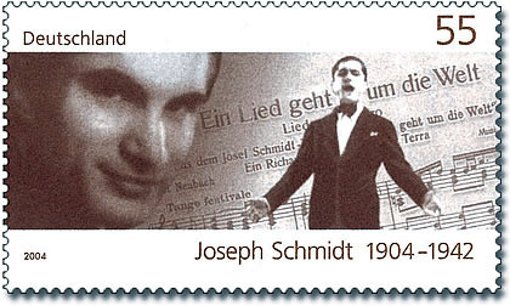
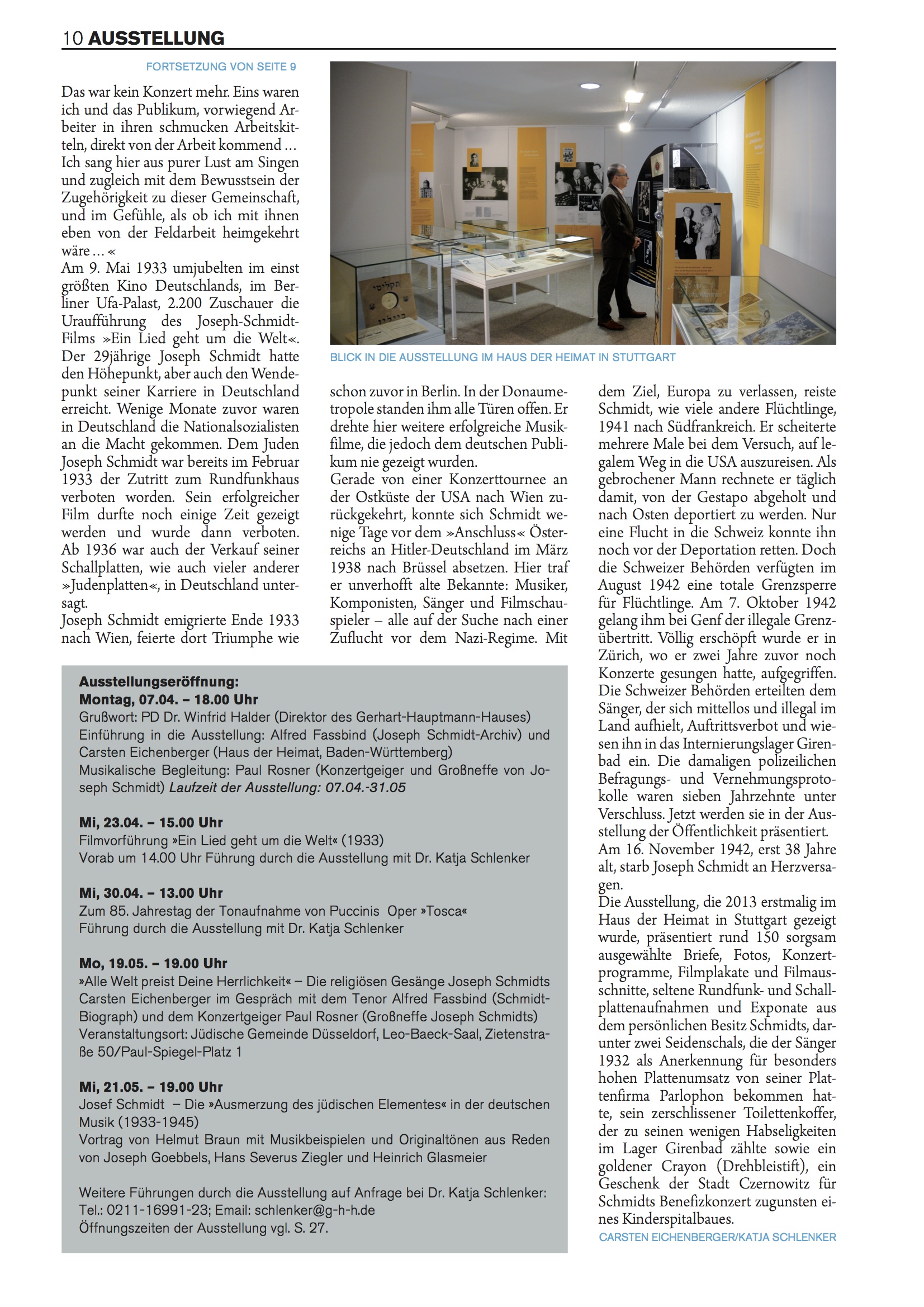
Joseph Schmidt – His Song Goes Round the World




More on Movie “In Sarmatien”
From Gabriele Weissmann
Dear all,
Last week Volker Koepp invited us to the Berlin premiere of his new
movie “In Sarmatien” which took place in the Akademie der Künste. We
were very impressed. It is a superb documentary.
The many facets of the film are overwhelming. Its humane approach, its
references to history, to the past of peoples and the ensuing destinies,
should be a must-see for the contemporary generation and the educational
system world-wide.
It so happened that the premiere fell on a day when the events in Crimea
and the Ukraine were hot and moving fast.In the film,
Koepp interviews persons from Moldavia(Kisinau)Bielorus (Grodno)
Ukraine (Czernowitz),Lithuania, Kaliningrad (Königsberg) : and
everywhere the persons talk about their dreams for a better life, the
economical and political problems of the present situation,
and some, of their fears of a Russian takeover.
Considering the current events in Eastern Europe,this film is amazing.
In the trailer shown on today’s List, next to Tanja Kloubert,we see and
hear Felix Zuckermann, the son of Frau Zuckermann from the former movie.
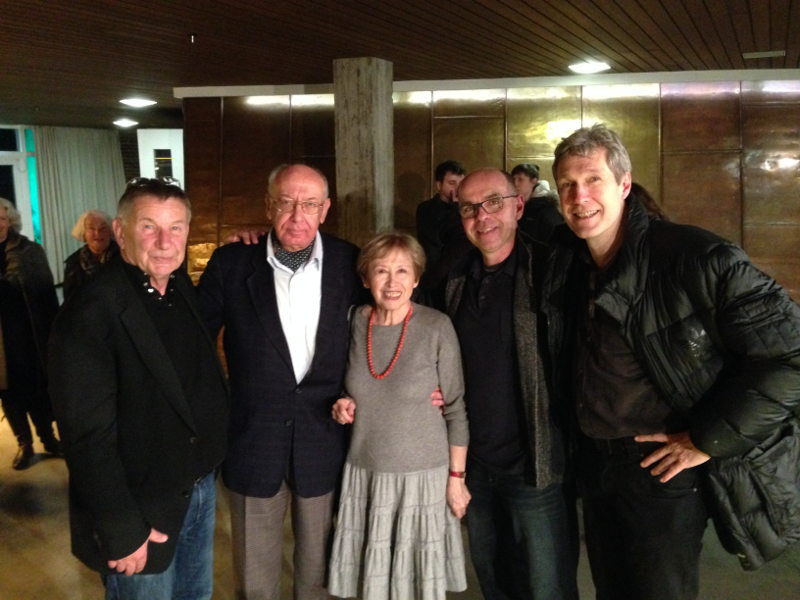
In the photo (click to enlarge), you will see Volker Koepp first on the left, my
husband and myself, and on my right,Fritz Hartthaler, the producer of
many Koepp documentaries, which are acclaimed all over the world.)
Not in the picture is Thomas Plennert, the outstanding cameraman, who
contributed to Koepp’s films for many many years. His masterly hand
at rendering landscapes as breathtakingly live paintings, and showing
people’s faces in their truthful, natural expression enriched Koepp’s
movies to make them cineastic works of art.
Koepp has a very personal way of asking and getting answers, of looking
intensely for people and places, thus painting a very complex picture of
his documentaries. Koepp genuinely likes people and their stories,
is interested in them, and he gets a most rewarding feed-back.
Have just heard today that the DVD will be on sale as from September
2014 (www.salzgeber.de/info@salzgeber.de).
Ten years ago, on the occasion of my husband’s 60th birthday party,
my husband finished his speech with this message:
” – We try to find answers to the questions of the present: All of us!
– We try to decipher the mysteries the future holds in store for us: All
of us!
– Only occasionally we remember that we are made of the dough of the
past. All of us!
Gabriele
New at the (German) Movies: “In Sarmatien” by Volker Koepp
Lipcani Jewish Cemetery Destroyed by Fire
Irena Sendler, Social Worker, Humanitarian, Legend
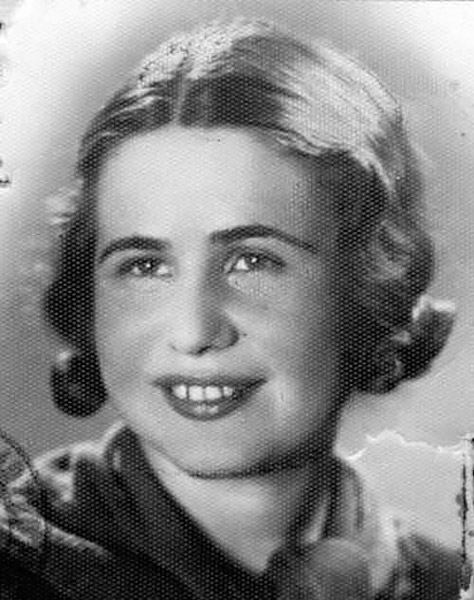
Guest post by Laurie Rappeport, Safed/Israel: One of the biggest challenges that present-day Holocaust researchers face is the dwindling number of survivors who are still alive to bear testimony to their lives under Nazi rule. Many Holocaust memorials and museums, among them Yad Vashem, are working against the clock to collect testimonies and conduct research that can only be accomplished as long as first-person witnesses are accessible.
In addition to memorializing the victims these investigations are also frequently used to honor Righteous Gentiles — people who risked their lives to save Jews during WWII. Numerous archivists and researchers at Yad Vashem are trying to ascertain the needed information in order to acknowledge these individuals.
Sometimes, information about an episode or activity comes to light unexpectedly. Such was the case of Irena Sendler, a Polish woman who was honored by Yad Vashem in 1963 for her role in saving over 2500 Jewish children from the Warsaw ghetto. Sendler received one of Yad Vashem’s first Righteous Among the Nations honorariums but after she returned to Poland her story was forgotten. In 1999 however, a group of non-Jewish schoolgirls from Kansas, involved in a social studies assignment, heard a rumor about Sendler and decided to pursue the story. Thanks to these girls the incredible story of Irena Sendler’s wartime activities was publicized worldwide at the Milken Center .
Irena Sendler was an employee of the Warsaw Department of Welfare when the Germans invaded Poland in 1939. She became an active member of the Zagota underground — a resistance group which specialized in assisting Jews who were trying to escape from German persecution. In conjunction with Zagota Sendler helped Jews find hiding places and obtain false papers to enable them to hide. By 1940 Sendler was Zagota’s head of children’s services and she began to look for ways to help Jewish children escape from the Germans.
In 1940 the Germans built the Warsaw ghetto and imprisioned almost half a million Jews behind the ghetto walls without adequate food, shelter or medical care. Irena Sendler was able to obtain a pass that identified her as a nurse. She had free passage into and out of the ghetto and, at first, she used her pass to try and smuggle food and medicines into the ghetto. Sendler quickly saw that such efforts were like a drop in a bucket and she decided that, in order to help the largest number of people, she would have to find another course of action.
Sendler and the Zagota organization devised a plan which would allow her to smuggle children out of the ghetto. She began to pick children off the street — children whose parents had been murdered or simply disappeared. She sedated the children and smuggled them out of the ghetto by hiding them in toolboxes, luggage and in wagons under barking dogs and garbage. She found tunnels and sewers under the ground and, using those tunnels, was able to lead the older children to the “free” side of Warsaw.
Sendler’s next course of action involved speaking to parents and asking them to allow her to take their children out of the ghetto. In an interview that Sendler conducted in 2004 she described those experiences.”I talked the mothers out of their children. Those scenes over whether to give a child away were heart-rending. Sometimes, they wouldn’t give me the child. Their first question was, ‘What guarantee is there that the child will live?’ I said, ‘None. I don’t even know if I will get out of the ghetto alive today.” Many parents refused to allow Sendler to take their children. They held out hope that, by staying with their families, the children had the best chance of survival. Other parents were concerned that the children would not be able to survive among anti-Semetic Polish gentiles. Over the course of two years however, Sendler was able to smuggle over 2500 children out of the ghetto. She recorded their names and their hiding places on pieces of tissue paper and hid them in glass jars which she buried in her yard. Zagota found hiding places for the children in convents, orphanages and with sympathetic Polish families. Sendler was arrested after the fall of the Warsaw ghetto and sentenced her to be shot but Zagota was able to rescue her and she lived out the rest of the war in hiding. When the Kansas students began to research Sendler’s actions during the war, there was little information available, but Sendler herself was still alive. The girls obtained funding that allowed them to travel to Poland and interview Sendler. They then created a massive project, Life in a Jar, to honor Irena Sendler’s heroism and bravery.
Laurie Rappeport lives in Safed, Israel. She teaches Judaism and Israel-related subject via elearning to American day school and Hebrew school students.
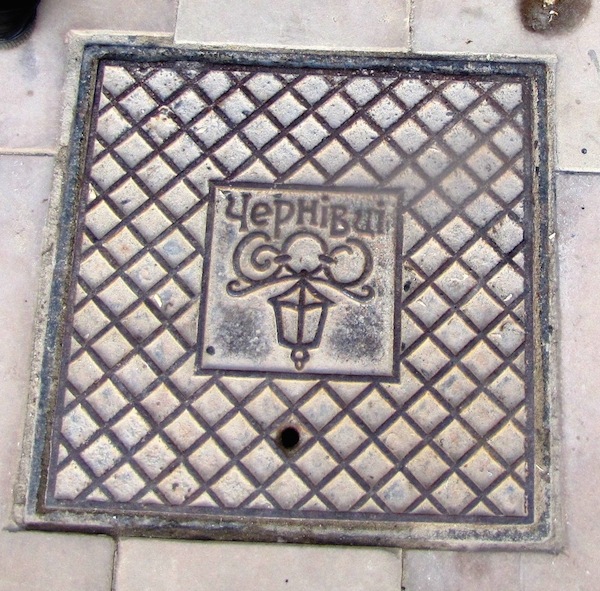
Manhole Cover Variety in Czernowitz
 Courtesy by Marion Tauschwitz
 Courtesy by Irene Fishler
 Courtesy by Asher Turtel
Who Knew Hermann Schimmer?
From Corinne Schimmer:
[click on photos to enlarge]
Corinne is trying to find anyone who knew her father, Hermann Schimmer, from Czernowitz.
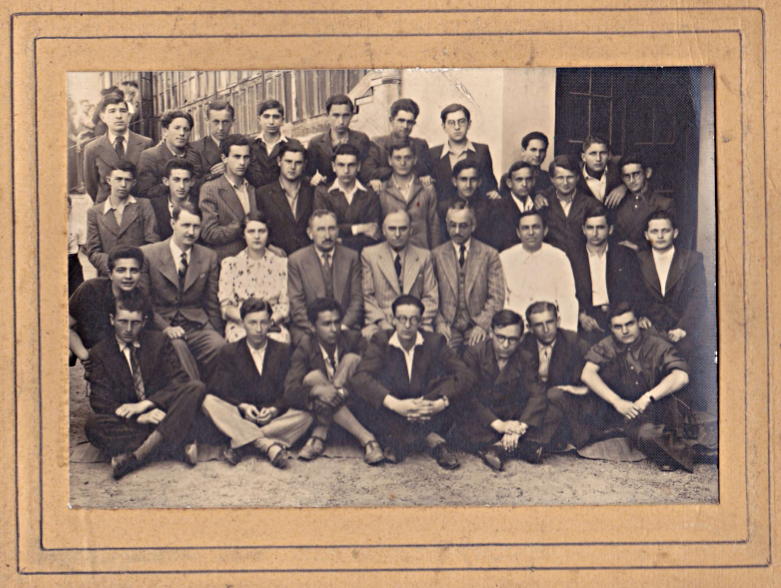
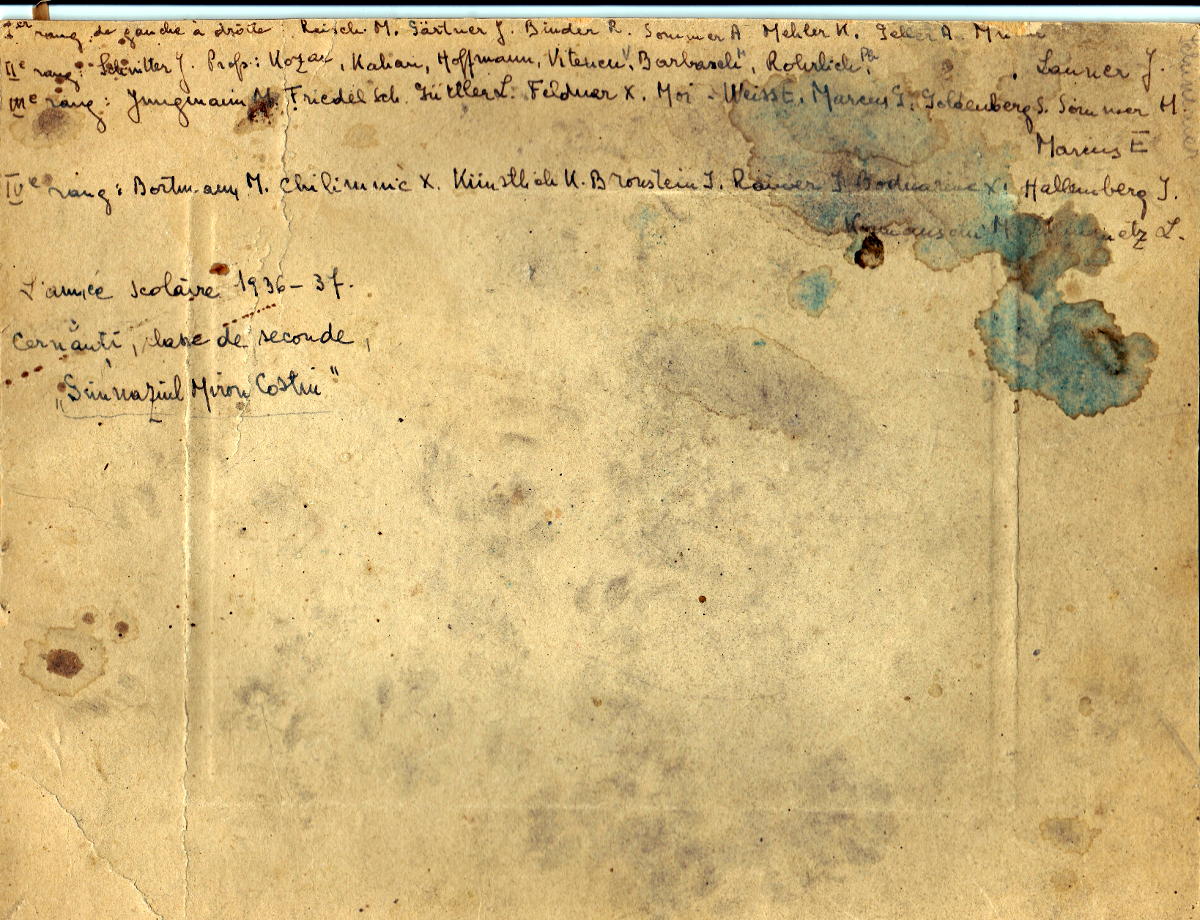
The first photo, front and back were taken in Gimmaziul Mirou Costiu (?) in 1936/37. Corinne says: ” My dad wrote the names on the back: he is in the third row [5th from the left]”.
Front:
Back:
The second photo is of Class 1935 My dad is second from the right in the front row:
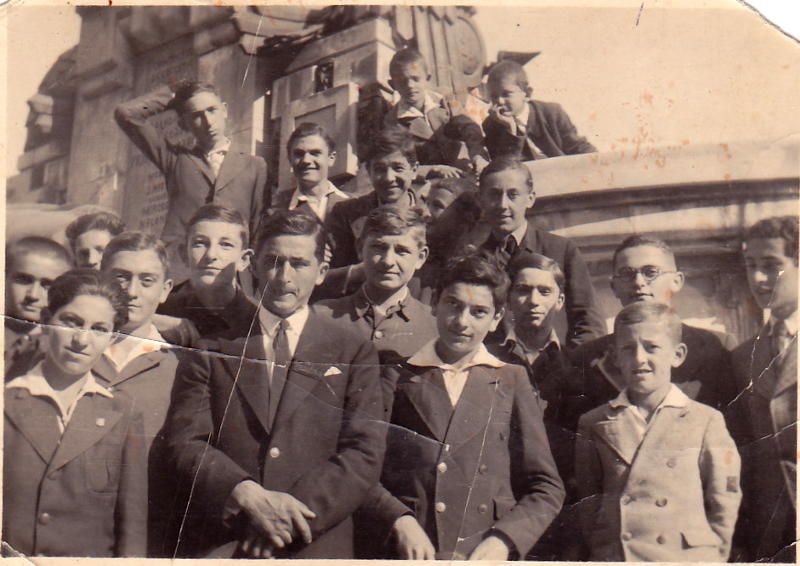
The last photo is of my grandmother born Eva Hilsenrathe. It would be great if anyone could remember a name or anything!

Corinne Schimmer,
Caen, France
Exhibition
From Peter Elbau…
[click on photo to enlarge]

1930’s Cz Class Photos
From Stephen Winters
[click on photos to enlarge]

My father, Stewart Schapira’s elementary class photo; possibly second grade; 1931—School on Landhaus Gasse; Stewart is second from left in last row. Stewart’s jacket referred to as Yanker.

Stewart’s Schapira’s fourth grade—elementary school on Landhaus gasse; Stewart is fourth form right (with necktie) next to last row; last row, third from left – individual with last name of Geller.