Tag Archives: Czernowitz

Lecture by Prof. Peter Rychlo

Rychlo-Bln1-14 041

Dear friends,
On Tuesday we went to a lecture held by Professor Rychlo from the
University of Czernowitz, from the beginnings of the city, its history,
its culture, with special emphasis to the Jewish literary scene,
starting with Margul-Sperber, Kittner, Rose Ausländer, and continuing
until the younger generation, i.e. Weissglas, Celan, the Yiddish poets
Itzhik Manger and Eliezer Steinbarg.
The lecture took place in a beautiful book-store, with a huge variety of
classical and modern literature. Two days later, Peter Rychlo continued
his tour with a similar lecture at the Jewish Community Center, which he
held in Russian, probably to a public of many ex-Czernowitzers who
emigrated in the past 20 years to Berlin.
Gabriele
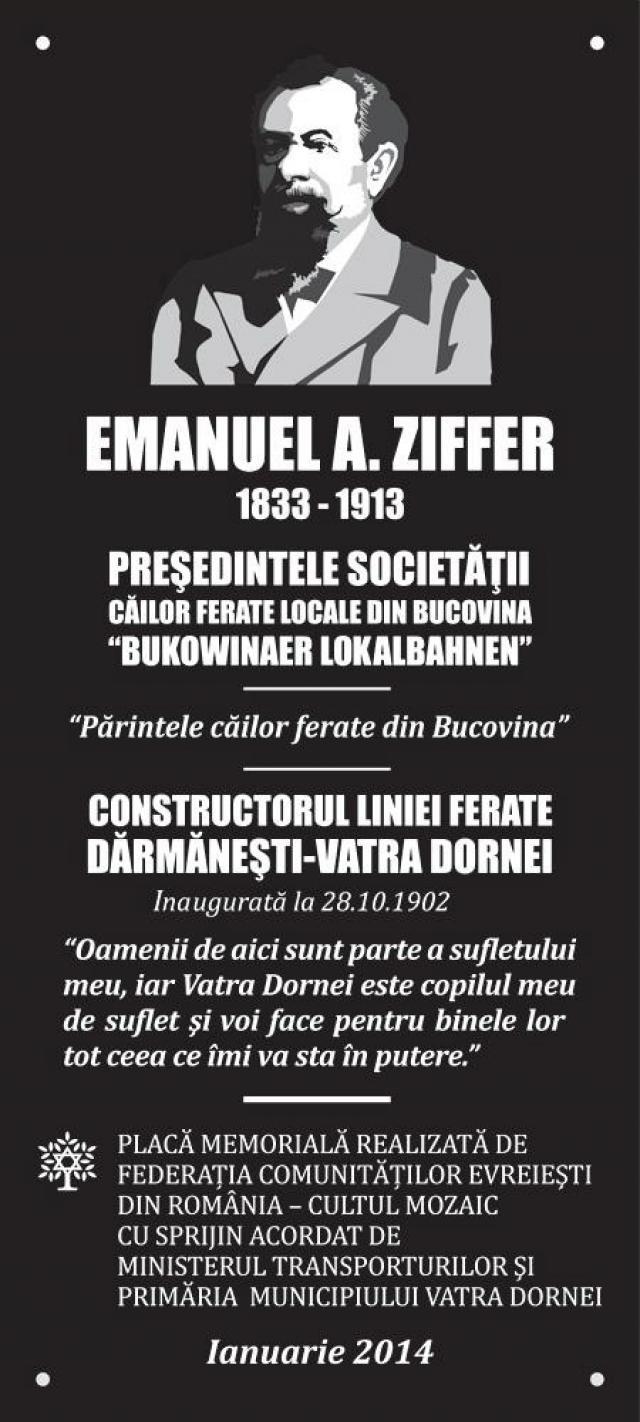
Commemorative Plaque for Emanuel A. Ziffer, “Father of the Bukovinian Railroad System”

322955maxim

Links:
http://hauster.blogspot.de/2013/10/the-honorary-citizen-of-czernowitz-from.html
http://www.vatradorneilive.ro/search/label/Stiri%20Vatra%20Dornei
http://www.monitorulsv.ro/Local/2014-01-22/Parintele-Cailor-Ferate-din-Bucovina-onorat-la-Vatra-Dornei
http://ehpes.com/blog1/2013/12/16/emanuel-a-ziffer-the-forgotten-honorary-citizen-of-czernowitz/
http://de.scribd.com/doc/180469996/Ziffer-parintele-cailor-ferate-din-BUKOWINA-pdf
http://ehpes.com/blog1/2012/11/03/iron-railway-fueled-by-gunpowder/
http://hauster.blogspot.de/2012/06/end-of-route-diversion-in-vatra-dornei.html

IMG_2840DSCF6257P1100156

In due consideration of their engagement related to the acknowledgement of Emanuel Alois Ziffer’s role as the “Father of the Bukovinian Railroad System”, the Federation of Jewish Communities of Romania decorated Paul Brașcanu and Ilie Boncheș, the mayor of Vatra Dornei, by the Medal for Friends of Jewish Communities of Romania.
Link:
http://www.monitorulsv.ro/Local/2014-01-27/Doi-dorneni-au-primit-medalia-Prieten-al-Comunitatilor-Evreiesti-din-Romania

From Bukovina via Mechelen/Belgium to Auschwitz • 1942-1944

As a result of the meticulous and thorough research of the Kazerne Dossin Memorial, Museum and Documentation Centre on Holocaust and Human Rights, Mecheln-Auschwitz 1942-1944 is a trilingual series (Dutch, French and English) of four books dealing with the persecution and deportation of Jews and gypsies from the SS-Sammellager in the Dossin Barracks in Mechelen to Auschwitz. Only a few miles away fom the SS Camp Fort Breendonk, the Dossin Barracks were used from 1942 until 1944 as a transit camp for Jews and gypsies from Belgium and the North of France, assembled here to set out on their journey of no return to Auschwitz. The first part of the series presents the reader with a historical overview of the racist and anti-Semitic persecutions in Belgium and the North of France. It focuses on the complex and poignant story of the action, reaction and interaction between occupier, occupied and persecuted, confronted with the final solution. It also relates the history of each individual transport.


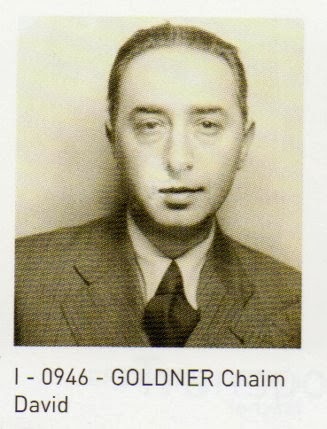
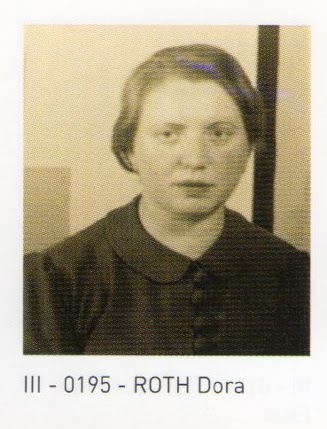
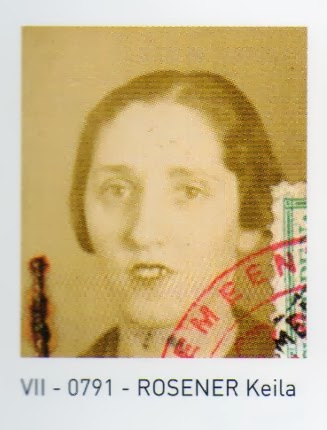
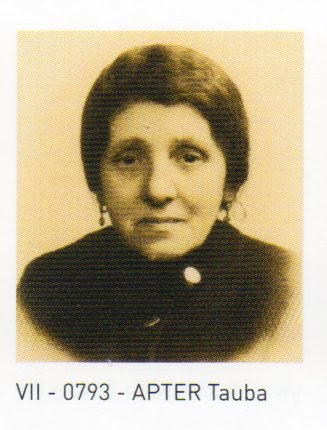
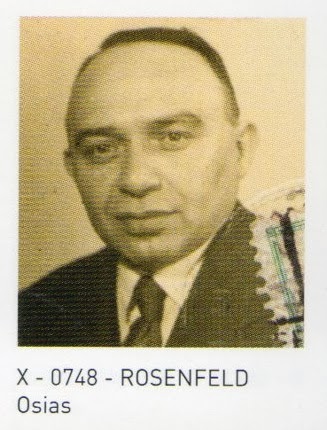
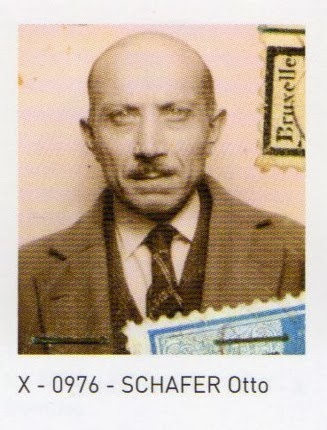
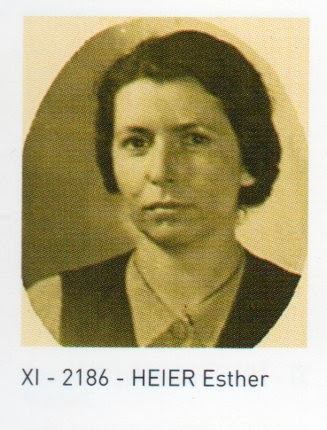
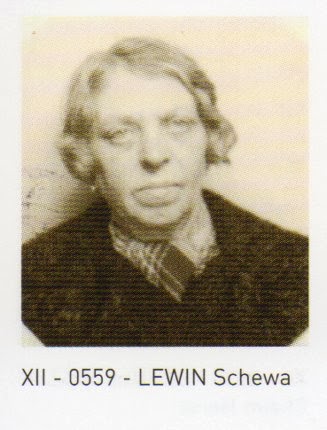
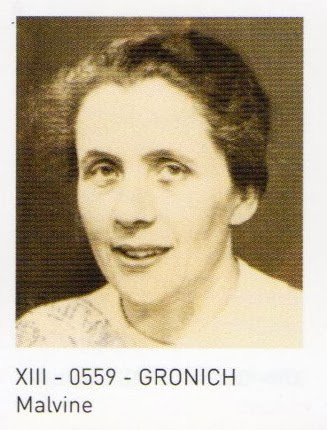
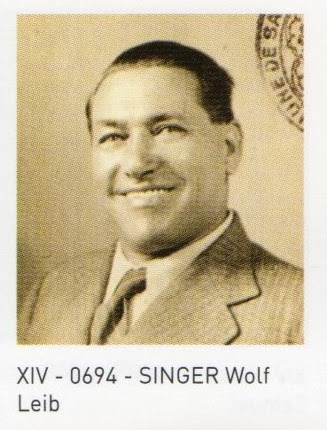
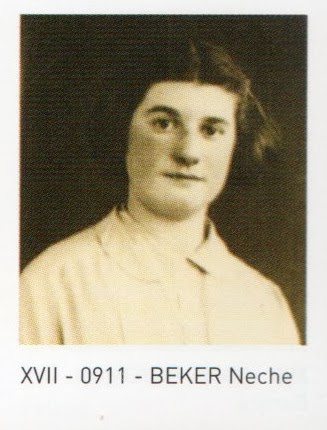
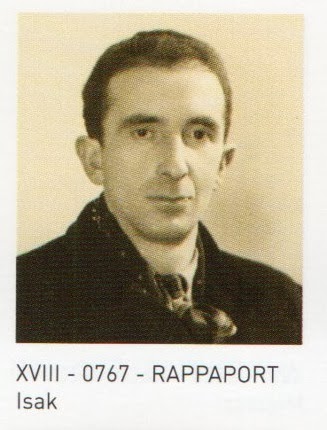
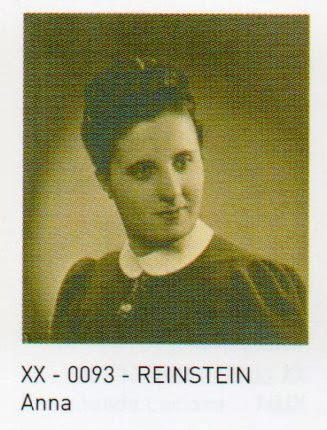
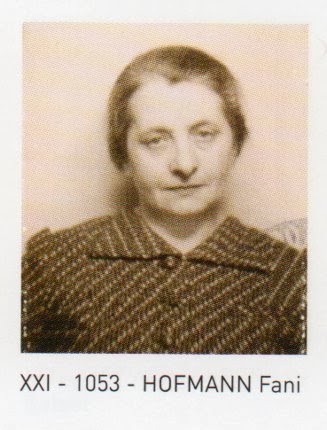
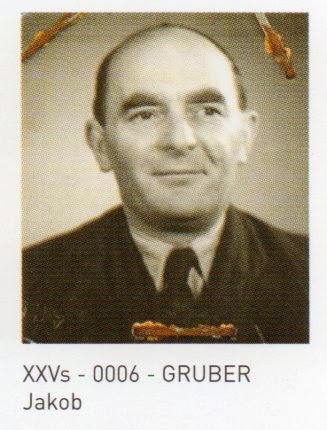
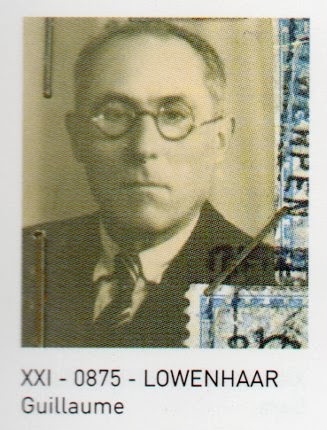
Parts two and three show us the portraits of 18,522 out of 25,259 deportees, wagon by wagon and transport by transport. These pictures literally give the genocide a face. Among these portraits we succeeded to identify 97 out of 104 deportees, who had their roots in Bukovina. Leon Messing, born on 12 June 1927 in Czernowitz, was 15 years old and the youngest deportee from Bukovina on the date of departure of Transport 10 on 15 December 1942. The oldest deportee from Bukovina was Abraham Moses Reder, born on 17 August 1866 in Czernowitz, i. e. he was 76 years old on the date of deportation on Transport 11 of 26 September 1942. Just like my uncle Maximilian Hauster, born on 26 November 1909 in Czernowitz, deported with Transport 19 of 14 January 1943, neither would return in 1945.

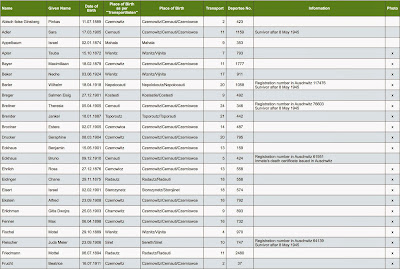
Part four contains the revised and corrected alphabetical list of names of the victims, together with biographical information about their personal fate. We have excerpted from this database those 104 deportees, who originated from Bukovina and compiled a listing in alphabetical order, which is available for download as PDF file by clicking just here or on the picture below.
http://hauster.de/data/Mecheln.pdf

Only two women and two men out of 104 deportees survived after 8 May 1945: Sara Adler and Theresia Breitner from Czernowitz, Wilhelm Berler from Nepolokoutz and Juda Meier Fleischer from Siret. 96,2% of the people originated from Bukovina deported on these in total 28 Transports were wiped out.

The documentary Transport XX to Auschwitz by Karen Lynne, Richard Bloom and Michel van der Burg is illustrating the inhuman and unimaginable suffering of the Jews and gypsies from Belgium during the Holocaust.

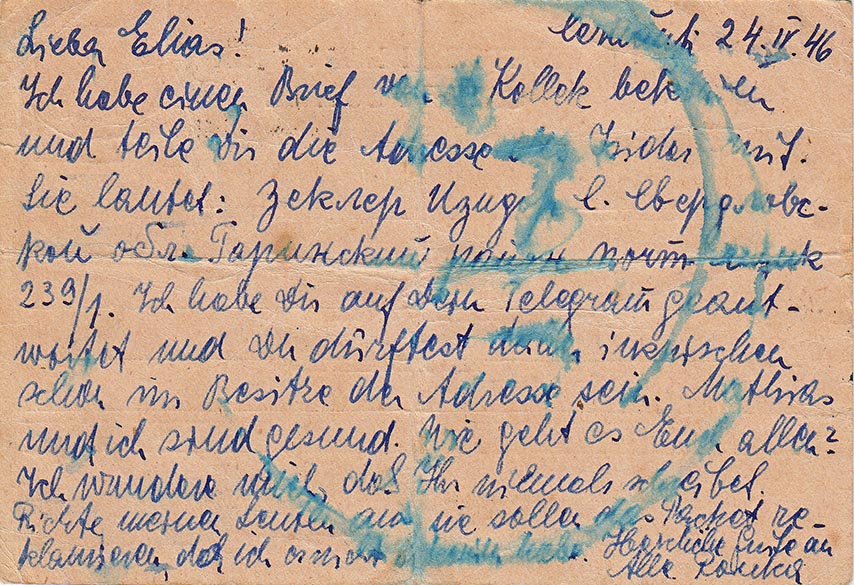
April 24, 1946: Postcard from Czernowitz (U.S.S.R.) to Tel Aviv (Palestine)

Zw1Zw2This correspondence between notable Czernowitzers is brought to you by courtesy of Peter Elbau. As sender we discover Rahel Zwilling, the mother of Matthias Zwilling [Herr Zwilling und Frau Zuckermann by Volker Koepp], and the addressee is Dr. Elias Weinstein, the founder of “Die Stimme” and the author of “The Elias Weinstein Petition”.

Emperor Franz Joseph Jubilee Orphanage for Israelites in Czernowitz

IMG_0354Click on the front cover to download a PDF version of the booklet!

Hugo Gold, History of the Jews in the Bukowina, The Oldest Societies, Institutions and Organizations of Bukovina by Prof. Dr. Erich Neuborn, Tel Aviv, p. 153: “The opening of the Jewish Orphanage, took place in 1904/1905. Already in 1898 on the occasion of the 50th anniversary of the reign of Emperor Franz Joseph I, the idea of building an orphanage in Czernowitz was discussed and an executive committee was formed to raise the necessary funds. Members of this committee were among others, Markus and Rachel Schlaefer, Benjamin, David and Jetti Tittinger, Loebel and Cecilie Salter , Josef Steiner, Jakob and Toni Gold, and Dr. Benno and Fanni Straucher It wasn’t until 1904, that the orphanage on Franzosgasse was completed when the Heinrich and Josefine Wagner endowment of 662,928 crowns was activated and used for the construction of the orphanage. The festive opening of the orphanage was attended by the Austrian Minister President, Dr. Ernest von Koerber, the Bukovina State President, Prinz Konrad Hohenlohe and the Greek Orthodox Archbishop and Metropolitan, Dr. Vladimir von Repta. In 1913 the orphanage was legalized for the second time as the Emperor Franz Josef Jubilee Orphanage Foundation for Israelites in Czernowitz and latter was administered by the Community. The mission of the orphanage was to raise Jewish orphans of both sexes and to train them for future employment.”
WagnerGasse 040