Decoration of the Austrian Cross Honor for Science and Art to Mrs.
Hedwig Brenner with The Ambassador of Austria, Franz Josef Kuglitsch.



 Alternate utilization due to parking place shortage in Bucharest.


CBCradio:“She was from Czernowitz”; Vancouver writer Shula Klinger, raised on hazy family stories and old photos of people nobody could identify, searches for information about her grandmother whose early life in a cultured central Europe city was shattered by anti semitism and the rise of the Nazis.



The General Assembly of the “Czernowitz Old Choral Synagogue” and the elections for the board took place in April 1934. 96 out of 117 members attended the assembly and elected, under the direction of state prosecutor Axani (?!), as follows:
Osias Pohoryles, farmer – president
Samuel Gottlieb, industrialist – vice president
Jakob Peritz, industrial magnate – commitee member
Josef Wiznitzer, industrial magnate – commitee member
Moses Barabasch, exporter – commitee member
Jakob Jurgrau, storehouse owner – commitee member
Mechel Kottlar, exporter – commitee member
Salomon Picker, house owner – commitee member
Dr. Markus Rudich, lawyer – commitee member
Mechel Brender, industrialist – commitee member
Jakob Neumann, magistrate director – commitee member
J. J. Dawer, industrialist – commitee member
Schulim Brender, businessman – commitee member
The pictures are dated 2006 and 2008, but in January 2007, David Glynn from London wrote a most interesting mail on the “Chor Schul”:
http://czernowitz.ehpes.com/czernowitz12/testfile2007/0275.html
Concluziile Comisiei de anchetă pentru “Cercetarea neregulilor săvârşite cu ocazia evacuării evreilor din Cernăuţi” (1941) – Click here for download!
Liviu Carare: “The events in Czernowitz during 1941-1942 are a constituent part of the phenomenon of “ethnic cleansing” developed by the Romanian state immediately after the reconquest of the territories ceded to the USSR in the summer of 1940. The Jewish population of the city was enclosed in a ghetto as a preliminary measure to their deportation to Transnistria. The deportations were halted three days later because the Romanian authorities had realized that the majority of professionals and technicians in Czernowitz were Jews. These actions were possible due to the Mayor of Czernowitz, Dr. Traian Popovici, who managed to persuade the Romanian military governor and the head of state, Ion Antonescu to spare 20,000 Jews from deportation, claiming that they were vital to the economic stability of the town. The mayor attempted to stop deportations, issuing more than 3,000 certificates of exemption from deportation, but the officials of the municipality, the police, and the gendarmerie extorted enormous sums of money in return for these exemptions. Many Jews were deported even after they paid the ransom. The report captures the details of the establishment of Czernowitz ghetto, planning and organization of the deportations, but also how mayor Traian Popovici and other members of the sorting commission prepared the tables with Jewish experts in Czernowitz, saving from deportation sometimes even whole families.”
Mordecai Lapidot (18.05.2012): Chapeau to Liviu Carare for having located and published the fascinating, horrifying, but greatly revealing document of the Commission of Inquiry set up by the Fascist Authorities re the saving of more than 20000 of Czernowitz Jews (myself and my parents and relatives amongst them) from deportation to Transnistria. Having read the Romanian report of the Commission it is clear to me that in a way the Commission “laundered” the actions that were performed by Popovici and the other officials involved. As they mention there – you cannot prove the actions of bribery since neither the bribers nor the bribed can be expected to volunteer confirmation of their acts… As if the Sigurantza of the Fascist Regime could not have extracted the information had they wished to do so… All they mentioned in detail in their report were the discrepancies they discovered in the lists of those who were saved, e.g. persons that were obviously not of the profession that was recorded, or the names added in pencil or ink to the typed lists. I was 8 year old at the time but aware, from rumours that went around between the grown-ups, that apparently some bribery was involved. However it was believed not to be related to Popovici himself but to the many intermediaries. Now I learned a lot about what really happened from this and the other articles mentioned below.
Chapeau also to Edgar for locating this article by Liviu Carare. It is worthwhile to enter his name in Google – I found a number of interesting related articles by him. One about our Ghetoization in Czernowitz – CONSIDERAŢII PRIVIND PROCESUL DE GHETOIZARE A EVREILOR DIN CERNĂUŢI
http://www.history-cluj.ro/Istorie/anuare/AnuarBaritHistorica2010/07.pdf
Another – a collection of articles “Partide politice şi minorităţi naţional din România în secolul XX” includes some interesting articles: one on p. 11 “The Resolution of the Hebrew Issue in the Romanian Principalities (1848-1866) between Political Will and Social Failure”, one by Lya Binyamin on p 51 “Idei diriguitoare în Mişcarea Sionistă din
România. Congresul Sionist din 1919”, and one on p 247 by Liviu Carare based on the above mentioned report of the Commision of Inquiry “Deportările din Cernăuţi (1941). Mărturii pe baza unui raport de anchetă informativă”
http://istorie.ulbsibiu.ro/cercetare/Texte/Partide%20politice%20%205.pdf
as well as few others related to antisemitism in Romania and fate of Jews in other cities – e.g. Transilvania. Of course, only for those of us who still read Romanian, but all can benefit of the abstracts in English.
Ken Cutler (17.05.2012): I can’t recall if this was in the discussion about Popovici but these are his words translated:
http://www.jewishgen.org/yizkor/bukowinabook/buk2_062.html Continue reading
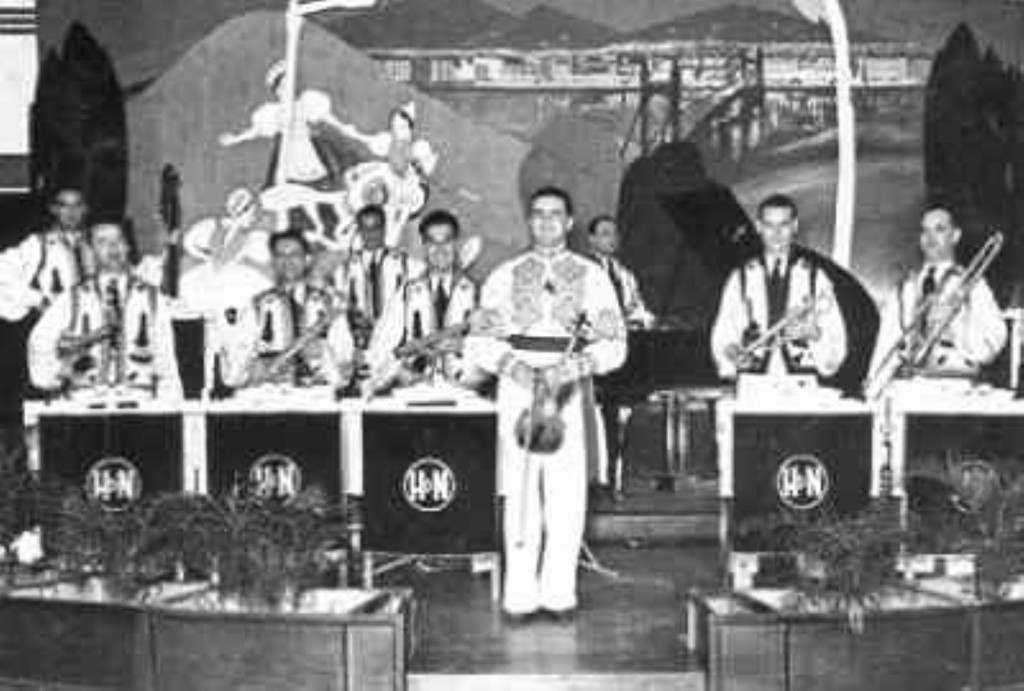
In the 1930s, the Czernowitzer Julius Fuhrmann was the bandleader of the famous Julien Foorman Orchestra performing at the legendary Hotel der Nederlanden in Batavia.
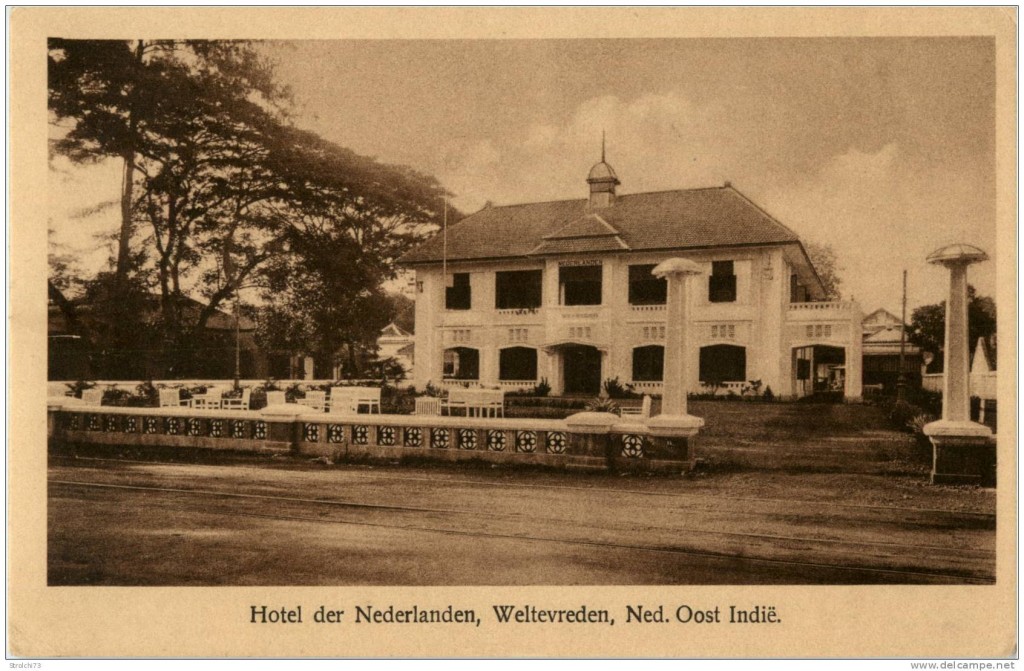

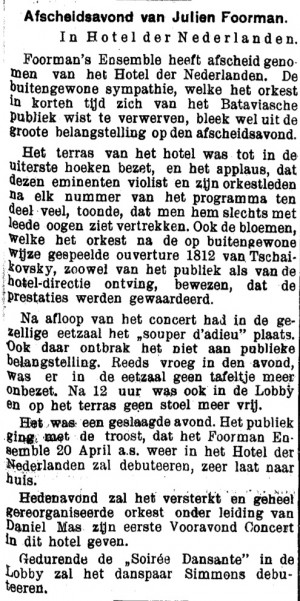
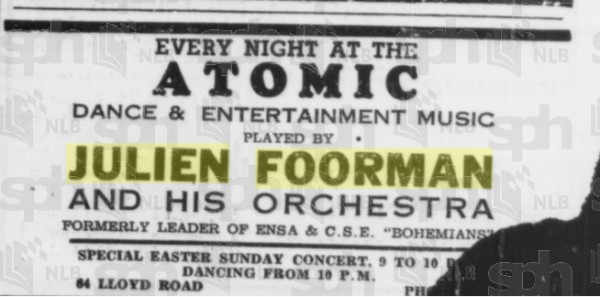
Czernowitz: http://czernowitzdaily.blogspot.de/2012/03/blog-post_20.html
Batavia: http://kranten.kb.nl/
Singapore: http://newspapers.nl.sg/
Maritime: http://www.maritiemdigitaal.nl/
ABC Radio National producer Natalie Kestecher visited the Eschenberg Observatory in Switzerland in September 2009 and coducted an interview with Markus Giesser, the Director of the Observatory, who – together with Freimut Börngen, the first discoverer – named the Joseph Schmidt Asteroid.


ABC Radio National from Australia broadcasted on Saturday, 15 January 2011, the program “A Star Fell – Remembering Joseph Schmidt”, which won a silver medal in the Best Music Special category of the New York Radio Awards.

ABC Radio National: “In this moving account of his life, we hear the songs immortalised by Joseph Schmidt’s voice, as producer Natalie Kestecher searches the archives and the recollections of those old enough to remember. Natalie takes us to a Sydney hospital ward where a former Vienna Mozart choir boy (Erich Troyna) recalls a live radio performance in 1935, and to Switzerland where an astronomer (Markus Griesser) has kept Schmidt’s memory alive by naming an asteroid after him. There too, she visits the Joseph Schmidt archive, lovingly curated by his biographer Alfred Fassbind, a former tenor himself.”