Category Archives: Memoirs

Important Czernowitz Dates

From Gaby Rinzler — regarding the list discussion about ‘important Czernowitz dates’:

In an attempt to leave my children and grand children information about my past I made a Geopolitical introduction. It may be pertinent to the present discussion re: what 1848, 28 of March 1914 and 1944, etc. meant to our group.

[Note* See List Archives on the website 2014 Archives II, starting June 27th 2014 for the discussion — Subject: 28 June 1940.]
rinzler1a
rinzler2

“I Remember Them Now” by Laurence Salzmann

Blue Flower Press: In the late 1930’s, there were eight thousand Jews in Rădăuți, a small town in the Bukovina region of Romania. During 1974-76, when the photographer/filmmaker Laurence Salzmann went to Rădăuți on a Fulbright Fellowship, there were only two hundred and forty Jews among the entire population of twenty-two thousand.

“I Remember them Now” is a short film made from newly rediscovered, kodachromes and audio from the Salzmanns’ original time in Rădăuți.

A Shtetl in the Caribbean

Read more and contribute to the realization of the project at:
http://www.cinecrowd.nl/een-sjtetl-de-cariben?language=en

Mark Wiznitzer: “Language and culture are so intertwined. My father left Vascauti (Vashkivtsi, Vashkowitz) 40 km from Czernovitz in Bukovina in 1927.He attended cheder and did not have the opportunity to complete his education because he left Romania with his older brothers while in his mid-teens. But he eventually learned to do business in 7 languages, including Japanese. But Yiddish was his first language, in which he wrote to his brothers using Hebrew letters. My maternal grandmother, having finished gymnasium in Dresden where my mother was born, and her Polish-born university-educated husband, spoke German. But their other European languages came in handy as they had their other children in France and Belgium, and settled first in Colombia, and ultimately in Curaçao. To assimilate, my grandfather added “Montevenado” to his name, a Spanish translation of his surname. And so the name on his gravestone in the ancient Jewish cemetery Beit Haim Blenheim reads “Max Hirschberg Montevenado”. My mother, having received a Dutch education in Curaçao was fluent in several languages. But she did not learn Yiddish until she and my father made it through WWII in Japan, where they lived with my father’s cousin from Czernovitz and socialized with other Jews from Eastern Europe, as well as Iraq and Syria. When my parents returned to Curaçao in 1946, Yiddish came in handy as the language of the growing Ashkenazi community, which had reached a sufficient critical mass to resemble a “Shtetl”. In Curaçao we Ashkenzi Jews were callled “Polacos” because the first to arrive came from Polish Galicia, ironically from Snyatin, immediately across the Cheremosh river from, and the nearest town to, my father’s birthplace. My childhood classmate, Sherman de Jesus, lived near our community’s Shaarei Tsedek synagogue and social Club Union. He was fascinated by our community early on. A successful documentary producer and director, he is now completing a film project on the Shtetl in the Caribbean. At the link above, there is a clip of some scenes shot so far in Bukovina, Belarus and Israel.”

The Theodor Kramer Prize 2013 Awarded to Margit Bartfeld-Feller

margit_318kl

The Theodor Kramer Prize of the Theodor Kramer Society is awarded to authors writing in a context of resistance or exile. The Holocaust memoirs of Margit Bartfeld-Feller, born on March 31, 1923 in Czernowitz, deported in 1941 to Siberia and emigrated to Israel in 1990 became known to a broad public. Margit Bartfeld-Feller gets in line with other famous prize winners, some of them from Czernowitz, such as

2001: Stella Rotenberg
2002: Alfredo Bauer und Fritz Kalmar
2003: Fred Wander
2004: Michael Guttenbrunner
2005: Georg Stefan Troller
2006: Milo Dor (postum) und Robert Sommer
2007: Jakov Lind
2008: Tuvia Rübner
2009: Ilana Shmueli und Josef Burg
2010: Elazar Benyoëtz
2011: Ruth Klüger
2012: Eva Kollisch
2013: Manfred Wieninger

1

Article on the prize award ceremony, published in the Decemer 2013 edition of Zwischenwelt

selmal Kopie
„Ich möchte leben“
Selma Meerbaum-Eisinger, 1924 – 1942

Laudatio für Selma Meerbaum-Eisinger
und Margit Bartfeld-Feller
und Rezension
von Christel Wollmann-Fiedler, Berlin

Continue reading

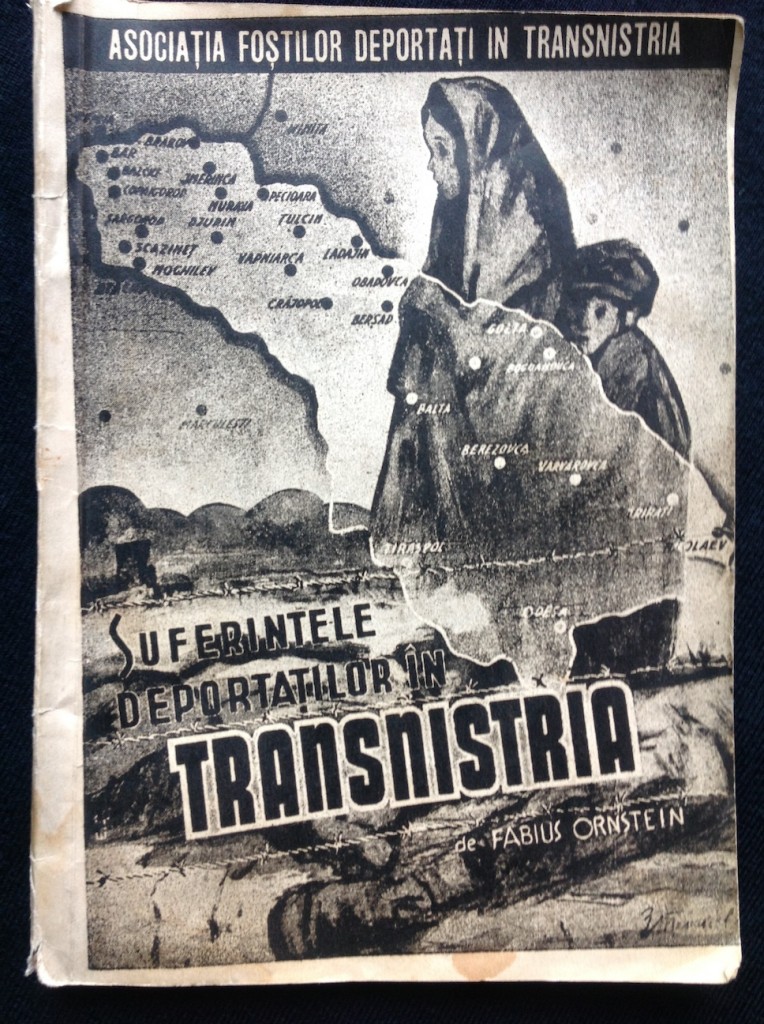
The Suffering of the Deportees in Transnistria

IMG_2511
Click on the front cover above to download the booklet!

I succeeded to acquire a very rare book: The Suffering of the Deportees in Transnistria by Fabius Ornstein, edited by the Association of the Former Deportees to Transnistria immediately after WW2 still in 1945. On Fabius Ornstein’s life-saving activity in Transnistria we learn from the Jewish Telegraphic Agency report dated July 26, 1943 as follows:

Thousands of Jews in Transnistria Have Not Seen Bread for Months, Hundreds Starving
Thousands of Jewish deportees confined in the various ghettos which the Rumanian occupation authorities have established in Transnistria, the Rumanian-administered section of the Russian Ukraine, have not seen any bread for months and the vast majority of them are threatened with starvation unless some assistance is forthcoming soon, according to private advices received here today. In the township of Copaigorod about 2,220 Jews are confined at present, the report discloses. Under the leadership of one of the deportees, Fabius Ornstein, the Jewish community has organized a free kitchen which has so far managed to distribute about 500 meals twice daily. These ‘meals,’ however, almost always consist of potatoes and nothing else. […]

LES ARPENTEURS – Le tourisme de la mémoire

LES ARPENTEURS : LE TOURISME DE LA MÉMOIRE

Dans les rues de Tchernivtsi, en Ukraine, Sylvie une jeune retraitée française, cherche l’ancien atelier de son oncle tailleur. Sa famille a perdu sa trace en 1941. À Lviv, autre ville ukrainienne, c’est Antonin, étudiant de 22 ans, qui entame avec sa grand-tante un périple émouvant dans son histoire familiale. Eux aussi sont à la recherche d’un aïeul disparu. Quant à Orane et Rémi, frère et sœur d’une trentaine d’années, c’est la Pologne qu’ils sillonnent, enquêtant sur la disparition de leur grand-oncle Léon.

Chaque année, de nombreux Français consacrent leurs vacances à tenter de retracer le destin de leurs ancêtres juifs. Ces derniers vivaient en Europe Centrale où des familles entières ont été les victimes de ce que les historiens appellent la « Shoah par balles ». Ainsi, en Ukraine, plus d’un million de Juifs ont été fusillés par les Nazis.

Ces touristes de la Mémoire portent un nom : les Arpenteurs. Ils sont aidés par des guides locaux qui préparent leur voyage, collectent indices et documents d’archives, repèrent les lieux ou retrouvent des personnes qui ont pu connaître leurs parents disparus. Un long travail fait de patience et d’obstination qui permet, parfois, de renouer les fils d’une histoire familiale souvent tragique.

Un reportage en forme de témoignage signé Renaud Lavergne et Vincent Barral

Berezhany: My City, My Pride

In Berezhany, a town in the Ternopil region of Western Ukraine, a group of local students discover their history.

Jeremy Borovits: First off, thank you for your responses, and for watching the film. It has been interesting for me to hear all of your thoughts about the topic.

My first point is this: In no way, shape, or form was my goal to exculpate Ukrainian participation in the Holocaust. I have been living in this country for three and a half years, and I am well aware of the role some Ukrainians played. The goal was to try and get the students to realize that the history of what happened in Berezhany is a part of their history, whether it happened to Jews, Ukrainians, Poles, Roma, or Armenians.

Judaism, as well as the Holocaust, is not taught very well in Ukraine. A part of this is certainly due to the role many Ukrainians play. But it is much more attributable to the fact that the Ukrainian education system is rife with corruption and is still based on the old Soviet model. All history taught in Ukraine is either Soviet-centric, Russo-centric, or Ukrainian-centric. This is a problem with how they approach history, not some deep rooted evil that lies within them.

Along that note, I have lived in Ukraine for three and a half years, and at least one conclusion I have come to is this: NOT ALL UKRAINIANS ARE ANTI SEMITIC. Are there anti-semites here? Yes, certainly. But in the time I have been here, I have never experienced any active anti-Semitism. This past Shabbat I was in New Jersey, and while walking home from synagogue someone yelled “Kike” at me from their car. And this was in New Jersey.

There were Ukrainians who participated in massacres during the war. There was a very small minority who risked their lives to save Jews. But the VAST majority was simply trying to survive. Their lives and the lives of their families were at risk. To hold all Ukrainians responsible for what happened is both historically inaccurate and morally wrong. In 1932-1933, Stalin exacted a famine on the Ukrainian people (as wel as some other nationalities.) Millions of people were starved to death (probably around 3 million). Lazar Kaganovich, a Jew, was one of the Soviet officials who executed the famine. To hold all Ukrainians as responsible for the Holocaust is to say that all Jews were responsible for the Holodomor (the name given to the famine.)

History is not, and will never be, black and white. We all have our own emotions that factor into the equation, the memories handed to us by our parents and grandparents and beyond. The challenge for all of us, and especially in projects like this, is to see the Grey.

No one had ever talked to these students before about Jews. They knew nothing. And now they know something. And they for sure, throughout the course of the project, got to know many Jews of various sizes, religious observance, and facial hair. I cannot guarantee that they have all changed. But I do get the sense that the next time someone says something about the Jews, these kids will stand up.

One last point to make: I am sure that all of you who have seen the film remember the man with the large mustache and the hat who spoke of the Jews drinking the Ukrainian’s blood. What didn’t make it into the final cut was the students arguing with him. How can you think that, they asked. How can you believe that? How can you not see that a person is a person.

I truly believe that hatred will breed hatred, and love will breed love. Teaching our children that we are all equal, that we are all individuals, and that every human life is sacred, is, for me, the best weapon against hatred, the best support for love.

This is a difficult topic, and the making of this film was a difficult process. I am sure some of will accuse me of naivety, or blindness, or perhaps of being a self-hating Jew. I can only tell you that it was while living in a Ukrainian village that I found Hashem, and my neighbors and students were there to support me.

If you have a response I welcome it, both via the forum as well as privately, if it makes you more comfortable.

All the best

Jeremy
Fortunoff Video Archive for Holocaust Testimonies

banner

The Fortunoff Video Archive for Holocaust Testimonies is a collection of over 4,400 videotaped interviews with witnesses and survivors of the Holocaust. Part of Yale University’s department of Manuscripts and Archives, the archive is located at Sterling Memorial Library.

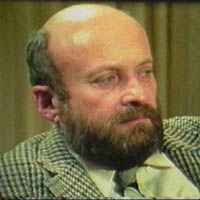
Professor Dr. Dori Laub was born in Czernowitz in 1937. With his parents, he was deported to Transnistria in 1942. His father disappeared during a German raid prior to liberation by the Soviets and he and his mother were reunited with his grandparents who had survived in Czernowitz. He immigrated to Israel in 1950 where he attended medical school. Today he is Associate Clinical Professor of Psychiatry at Yale University and a psychoanalyst in private practice. In 1979 he co-founded the Holocaust Survivors’ Film Project, Inc., which subsequently became the Fortunoff Video Archive for Holocaust Testimonies at Yale. Dori Laub has published and lectured extensively on the Holocaust.

laub_large

Bearing Witness to the Holocaust – How the First Video Archive of Holocaust Testimonies Was Established
“Tell Us What You See” – Interview with Professor Dori Laub by Yad Vashem

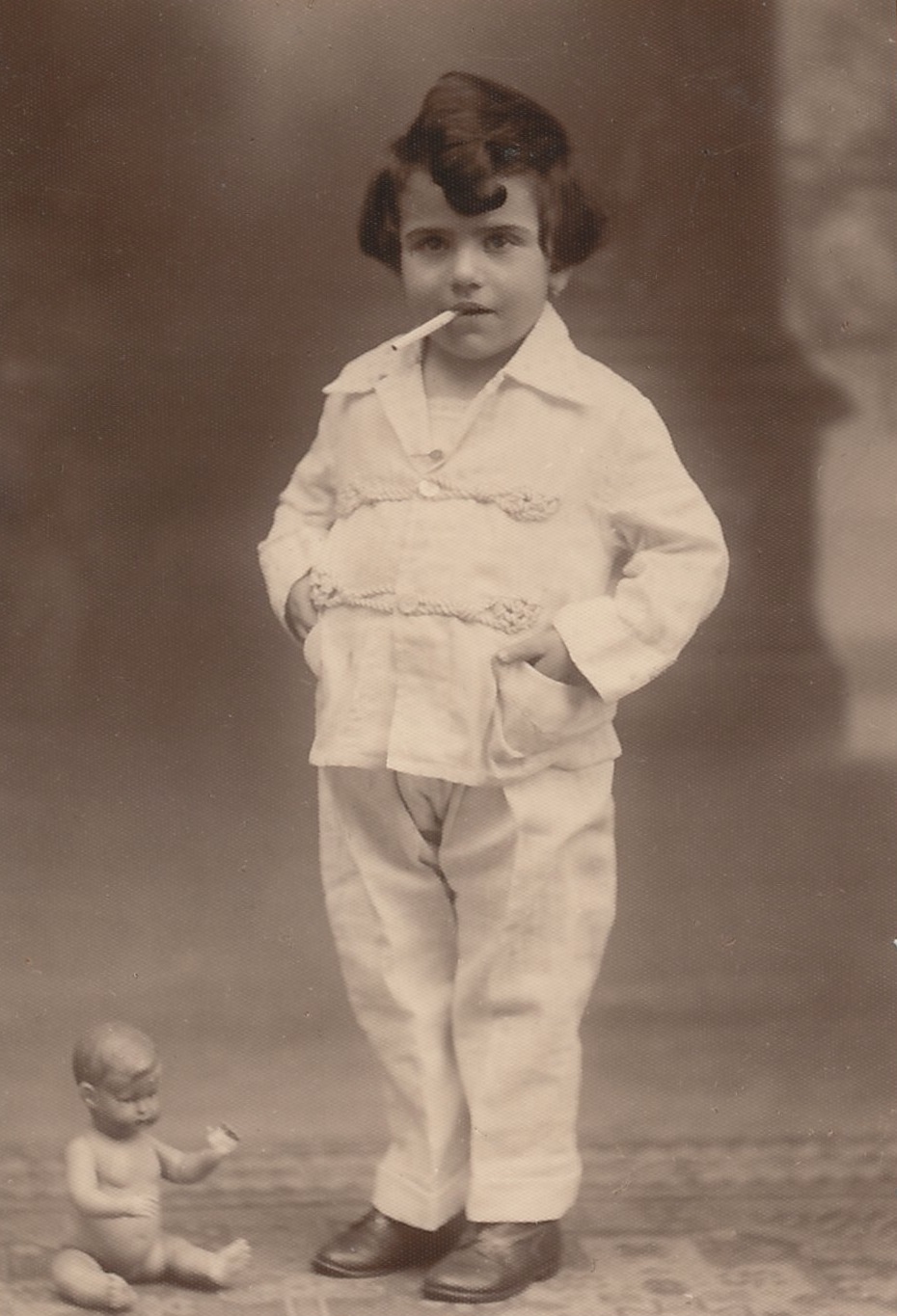
Politically Incorrect, But Beautiful Photos!

child_with_CAZ

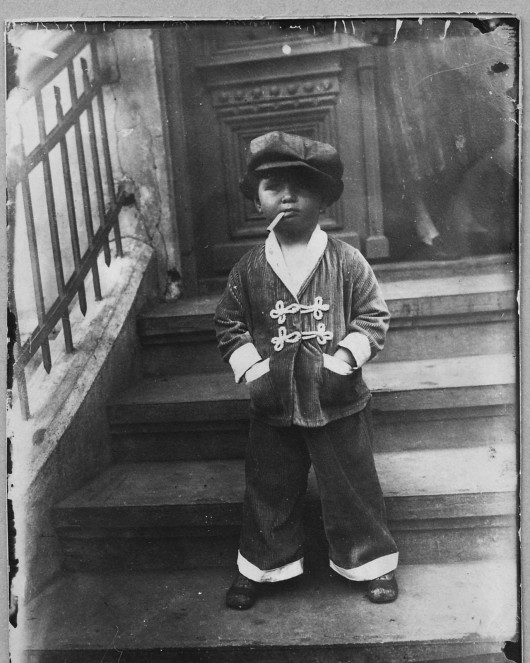
Iosif Vaisman: “A boy (or a girl?) in pajamas with a cigarette reading Czernowitzer Allgemeine Zeitung. May be somebody can recognize this child. […] Without trying to read too much into it, one can’t fail to notice several reveaing details. Most boys would pose as a sailor, a cowboy or something similarly “romantic” for a picture like this, this boy poses as a businessman (if a somewhat cartoonish one). Definite signs of the upper-class background: long and well cared for hair, starched and pressed pajamas, and, interestingly, Czernowitzer Allgemeine Zeitung – the more exclusive of two major German papers in Czernowitz (the other one – Czernowitzer Morgenblatt – was more “democratic”). But the most interesting part is the look on his face, very businesslike and cynical. The boy was a good actor.”

8565173318_1fb86f5786_h Victoria Gedaly, Römerbad, Czernowitz 1927

Ilana Gordon: “I was so surprised to see this picture. My mother has a similar picture that was staged at home. My great grandfather took my grandmother to America and left my mother at home. When they came back they saw my mother standing in front of their door. She was 3 years old, dressed like a man, with a cigarette in her mouth. This must have been some funny trend. When they came saw her, my great grandmother instructed her to say, (of course it was in German but I don’t know how to say it) “See what happens when you leave little children home!”

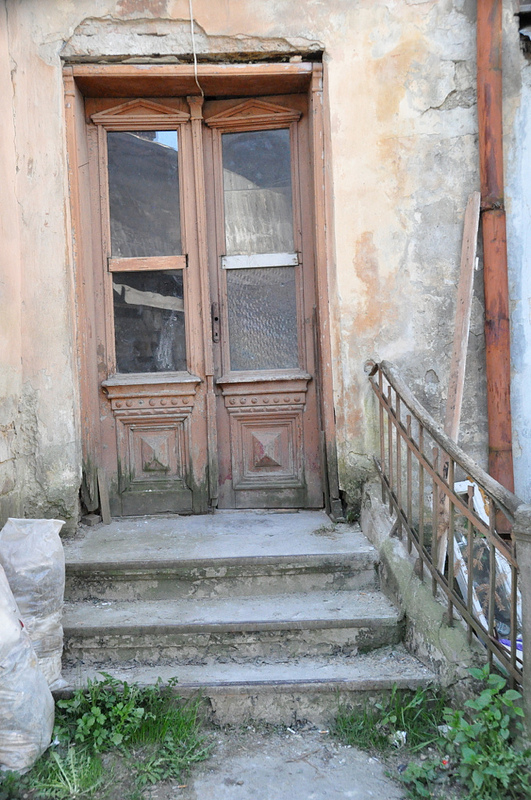
The interesting thing about this photo is that when I went to Czernowitz and found the Roemerbad we went into the courtyard and I immediately recognized the doorway and stairs that were exactly the same as they were in the photo.

8564827433_3d1b2533c0_c

Sylvia Segenreich: Das ist mein Bruder Theo [Theobald Engler] im Alter von fünf Jahren. Vielleicht war das anläßlich einer Purimfeier [1928]. Er ist so lausbübisch gestanden, ich weiß nicht warum. Ich war noch gar nicht auf der Welt, als das Foto gemacht wurde. Theo hat seit seinem 10. Lebensjahr bei der Maccabi Fußball gespielt. Er hat oft meinen Eltern nach der Schule bei ihrer Arbeit geholfen, und zweimal in der Woche mit einem Lehrer Religion und Hebräisch gelernt. Mit 13 Jahren hatte er seine Bar Mitzwa. Er ist aufs Gymnasium gegangen und hatte viele Freunde. Als er 15 Jahre alt war, wollte er, wie einige seiner Sportfreunde von der Maccabi nach Palästina auswandern, denn es war das Jahr 1938. Aber mein Vater wollte ihn nicht gehen lassen, er war noch so jung. 1941 wurde er von den Deutschen in Czernowitz erschossen. Da war er gerade 18 Jahre alt. [Source: centropa.org]

Segenreich006Theobald Engler, Czernowitz 1928

Yvette Pintar: My great grandmother, Rosa Berl, daughter of Abraham Engler and Chaje Berl, was born in Czernowitz in 1889. I have finally decided to write (to you) after seeing the various photos of children with cigarettes, which *immediately* got my attention when the first one was posted on your website. My great grandmother had a brother named Osias Engler (I think his name was changed from Berl to Engler) whose daughter Sidonie was born in Czernowitz in 1926. I am fairly certain that this is a photo of Sidonie Engler, and it was likely to have been taking somewhere around 1930, guessing from her age in the photo. I have often thought of posting to the group, as I wonder if anyone knew my family there. I think Osias Engler left with his wife Rivka and daughter Sidonie around 1948, after the war. I have no idea what happened to them or where they ended up after 1948. My great grandmother had already left many years earlier and had moved to Leipzig (she left Germany and emigrated to South America in 1946). But I just had to share this photo with you as it clearly belongs with the others. You are welcome to post it if you would like.

Sidonie cigarette Sidonie Engler, Czernowitz ≈ 1930