What to make of this?

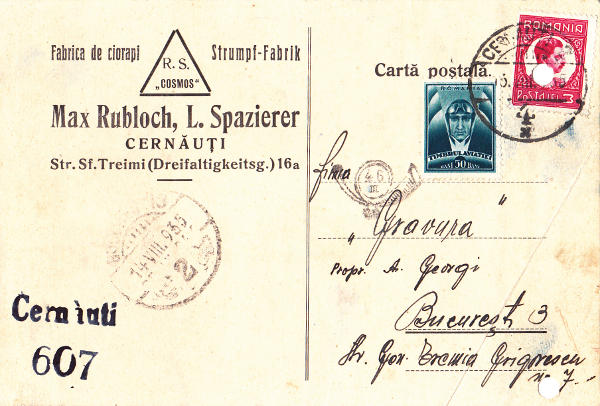
From Cornel Fleming:

The first name reminds me of the German word for garlic, and the second name is what they used to do in the Herrengasse and the Volksgarten….it means one who strolls for pleasure!! And I wonder what kind of stockings they produced..the kind that elegant ladies wore or the kind some of the uber-frummes wore! As I said too..still using the AUSTRIAN street name. May be worth forwarding to our historical genius Hedwig

C.

IMG1_0002

Austrian Decoration for Science and Art for Margit Bartfeld-Feller

Israel.3-4-14 1433

Margit Bartfeld-Feller und das Ehrenkreuz für Wissenschaft und Kunst der Bundesrepublik Österreich

Berlin –  Wien ist ein Katzensprung, von Czernowitz nach Vasjugan in Sibirien sind es bereits weit über viertausend Kilometer und von Tomsk nach Tel Aviv gar  mehr als fünftausend, eine lange und große Reise. Die lange große Reise war für Margit Bartfeld-Feller und ihre  Familie 1990 die erste Reise in ein westliches demokratisches Land, ein freies Land, das Land Israel, das Gelobte Land, nach 50 Jahren Verbannung. Als Einwanderer wurden sie aufgenommen.

1941 wurde Margit Bartfeld-Feller mit den Eltern und dem Bruder Otti bei Nacht und Nebel aus Czernowitz von den Sowjets nach Sibirien in die Taiga deportiert. Stalin, der Tyrann, befahl diese Untaten. Juden, Intellektuelle, Fabrikanten und politisch Andersdenkende  wurden vom Estland bis ans Schwarze Meer in Viehwaggons gepfercht, nordöstlich in Richtung Sowjetunion transportiert und weiter auf Schiffen nach Sibirien zum Schwerstarbeiten verschleppt. „Verrecken“ sollten sie, war Stalins Befehl! Margit war jung, gerade 18 Jahre alt, ihr Bruder jünger. In Czernowitz in der Bukowina wurde Margit Bartfeld 1923 geboren, ging dort zur Schule,  für Literatur und Musik begeisterten sie die Eltern. In  Czernowitz, der Stadt  Rose Ausländers und Paul Celans, lebte Margit in Geborgenheit. Noch bevor  Hitlers Schergen in die Bukowina kamen, ließ Stalin die erwähnten Bewohner abholen und schickte sie zum Sterben durch Hunger und unmenschliche Lebensverhältnisse in die Taiga an den Vasjugan. Ein schreckliches Leben erwartete die Deportierten dort. Wie Fliegen starben sie. 1948 heiratete Margit Bartfeld den ebenfalls aus Czernowitz deportierten Kurt Feller. In Krassnojarka, dem „Todesnest“, wie sie den Ort nannten, trafen sie sich wieder. Ihre Ehe begann mit geliehenen Eheringen.

Die Tochter  Anita wurde 1954 geboren, die kleine Familie Bartfeld-Feller teilte sich ein Zimmer in Tomsk.  1979 starb Kurt Feller, der inzwischen in Tomsk ein bekannter Architekt und Baumeister geworden war.

Margit Bartfeld Feller schreibt sich seit ihrer Ankunft im Heiligen Land  ihre Vergangenheit, ihr Erlebtes, von der Seele. Über zehn Bücher erschienen unter der Herausgabe von Professor Dr. Erhard Roy Wiehn  im Hartung & Gorre Verlag in Konstanz.

Der Theodor Kramer Literaturpreis wurde der Schriftstellerin im September 2013 in Österreich verliehen.

Vorletzte Woche überreichte Seine Exzellenz, der Botschafter der Republik Österreich, Herr Dr. Franz Kuglitsch, der einundneunzigjährigen Zeitzeugin und Autorin Margit Bartfeld-Feller in Tel Aviv das Ehrenkreuz für Wissenschaft und Kunst der Republik Österreich.

Christel Wollmann-Fiedler, Berlin, September 2014

Lu Rudel: Memoirs of an Agent for Change in International Development; My Flight Path into the 21st Century.

71U0YVCtGiL

I am happy to report to you that the book, over which I have been laboring for the past three years, has finally come off the press.  The title is, “Memoirs of an Agent for Change in International Development; My Flight Path into the 21st Century.”

The book has been selected for inclusion in the “Memoirs and Occasional Papers” series by The Association for Diplomatic Studies and Training.  You can find it on their website, (www.ADST.org).  Here is the link:

http://adst.org/publications/memoirs-and-occasional-papers/memoirs-of-an-agent-for-change-in-international-development/

The printed version is listed for purchase on Amazon as well.  Additionally, it is available for downloading at Amazon as an e-book for the Kindle – at the modest price of $3.08.

This short description of the book’s contents appears on the back of the book cover: “Lu Rudel describes his unique experiences with US foreign economic aid programs during some of the most dramatic international events since World War II. These include Iran after the fall of Mosaddegh (1956-1960); Turkey after the military coup of 1960 to the start of the Cuba Missile crisis; India after the death of Nehru (1965-1970); and Pakistan following the Soviet withdrawal from Afghanistan in 1988.  Rudel’s firsthand observations on Iran differ markedly from the description of events commonly espoused by some historians and journalists.”He also provides a firsthand account of the political metamorphosis over the past half-century of the “Group of 77” nations as they attempted to employ the UN’s economic development agencies to press for a “New International Economic Order.” These experiences lead him to draw important lessons about the conduct and effectiveness of foreign aid.”After retirement in 1980 he launched a second career, applying lessons learned from his work in international development to creation of a thousand-acre land development and resort in rural Appalachia.  His experiences over the following thirty years as an entrepreneur track the relentless growth of government regulations and the disappearance of community support institutions such as local banks, now being replaced by mega-banks.”Finally, he examines global trends of the past eighty years in four critical areas of change affecting our lives – population growth, science and technology, economic systems, and political structures – to draw some surprising conclusions and projections.”

I have placed a selection of photos on the web to complement the chapters of the book.  The photos can be accessed by a link on the web site. (www.rudel.net).

I enjoyed writing these stories dealing with my two careers.  You will have to decide if they make good reading.   A second, companion volume dealing with the more personal aspects of our family life is approaching completion.  I’ll let you know when that volume becomes available.

Lu Rudel, Bethesda, MD, October 2014

Medallion

From Jean Weightman:

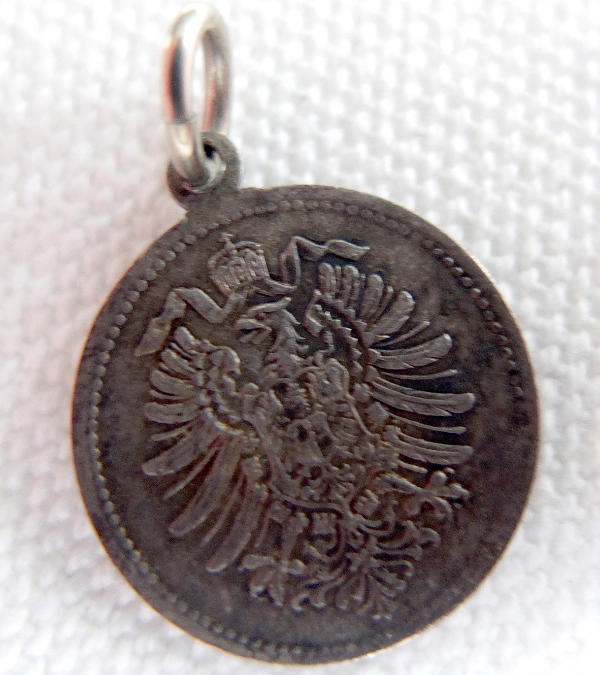
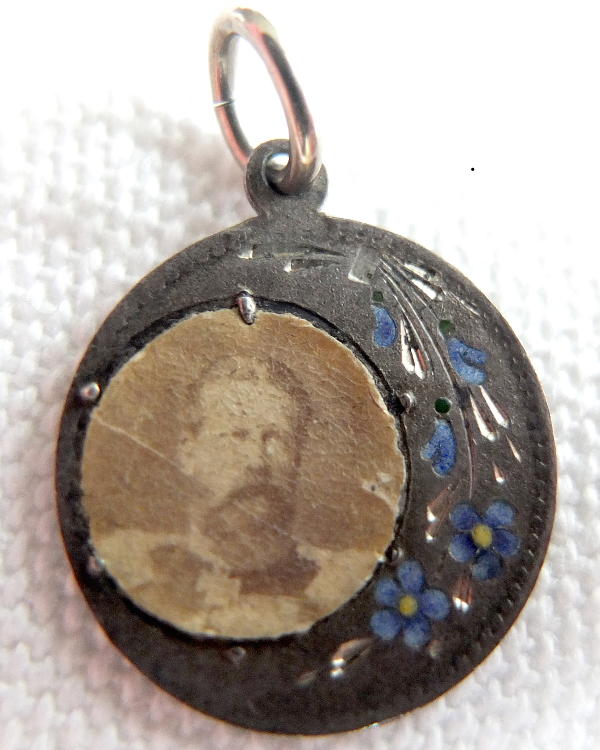
I have attached two photographs of a medallion I found among my mother’s things. My mother was born in Czernowitz in 1913. Her parents and maternal and paternal grandparents were all Czernowitzers from around the mid 1850s.

The medallion could be Romanian, Austro-Hungarian, German or something else.

It looks like a coin with the tiny photograph fixed to one side and decorated with enamelled Forget-me-nots.

I wonder if anyone from the list is able to identify the gentleman – possibly a monarch – and the coin. I cannot find a date on the medallion. It may have been on the side that was later decorated with the photograph and the flowers.

Thanks and best wishes to all.

Jean Weightman

Pendant1a Pendant2a

Selma Merbaum – Ich habe keine Zeit gehabt zuende zu schreiben

cache_2449382754

Gabriele Weissmann: On Monday night the reading for Marion Tauschwitz’s new book “Selma Merbaum – Ich habe keine Zeit gehabt zuende zu schreiben” [I had no time to finish writing] took place at Berlin’s big book-store, Dussmann. Organized as a dialogue between Marion Tauschwitz and the well-known (and beautiful actress)  Iris Berben, introduced by the publisher. The room was packed, and the interest great. Selma’s poems are already quite well-known in Germany and often read in schools. They both read from the book, Marion Tauschwitz also giving a general view of her search for Selma’s background and  Iris  Berben spoke of her love for the poems. She was deeply impressed when she read them in Czernowitz, in the Chessed Shoshana hall, with Prof. Rychlo interpreting.  Berben then read “Poem”, in a personal, very moving manner, in which Selma’s  yearning for love, for life, her sensibility, her premonitions, are so well formulated.   At the end Iris Berben read part of her well-written introduction. Tauschwitz’ book is an insider’s view of Selma’s life and writing, with very accurate research into the family history. She has searched  family records,  read intensively documentation and literature on the subject, interviewed  persons in Europe and Israel, has corrected irregularities including Selma’s correct name. She describes Selma’s strong personality against the background of the social, cultural and political influences on the young girl’s spiritual development.  Her sensitive poetry, her hunger for life, her political views and her sight of the tragic events which took place in the last years of her life. The tragedy of the concentration camps… Selma, through Marion Tauschwitz’s book has become alive again. Her poems are world literature. A lot of applause at the end, and people literally rushed with the books for signature.

Marion Tauschwitz and Iris berben at Kulturkaufkaus Dussmann, Berlin, on 29.09.2014

Ein Radiobeitrag der ARD-Kulturkorrespondentin Maria Ossowski,

auf amazon die ersten Leserstimmen,

sensibel die Einschätzung auf haGalil von Ramona Ambs,

auch ein Literaturblogger hat Selma Merbaums Biografie schon gelesen,

und auch avivia – online magazin hat genau gelesen,

weiterhin eine Rezension von Christel Wollmann-Fiedler.

Read more on Marion’s (litera)tour guide for October/November 2014 at:
http://www.marion-tauschwitz.de/lesetermine/

Czernowitz-5-13 2782

Sara Schmidt mother of Joseph

From Oren Saraf:

At the cemetery of Gura Humora, we found the grave of Sara Schmidt, the mother of Joseph Schmidt.

My grandfather , Dr. Scharfstein, was born in Gura Humora, and After becoming an ENT doctor, he lived in Czernowitz. (I am sure that the tonsils of some of our CZ-L members were removed by him in the ‘30’s.)

My ant remember that around ’36 or ’37, Joseph Schmidt came from Vienna to see Dr. Scharfstein for some problem he had in his throat. After the treatment they had privet recital at home.

Oren Saraf

The grave of Sarah Schmidt, mother of Joseph Schmidt at Gura Humora Romania

The grave of Sarah Schmidt, mother of Joseph Schmidt at Gura Humora Romania


Interesting Photo

Sometimes folks send me photos with no information — this is one of those.  I always write back asking for whatever info exists — in this case I received no response and the photo eventually got separated from the correspondence, becoming an orphan on my desktop.

So, perhaps the sender will recognize the photo and use the comment box to provide some context?

Looks like the late 20’s early 30’s in beautiful downtown Czernowitz — the Ringplatz by the Dermata shoe store?

jerome

image-a

Meisler School Class III 1939-40

From Oren Saraf — this photo from his Aunt’s album…

Return with Ehpes to those wonderful? days of yesteryear — Did you attend the Meisler School in 1939-40? Unlikely, but possible. Do you recognize anyone, or think you recognize someone?  Oren says his aunt Lotte sits just left of the sign board.

Click on the photo to enlarge

Czernowitz -Meisler School 1939-40 from Oren Saraf

Czernowitz -Meisler School 1939-40 from Oren Saraf